
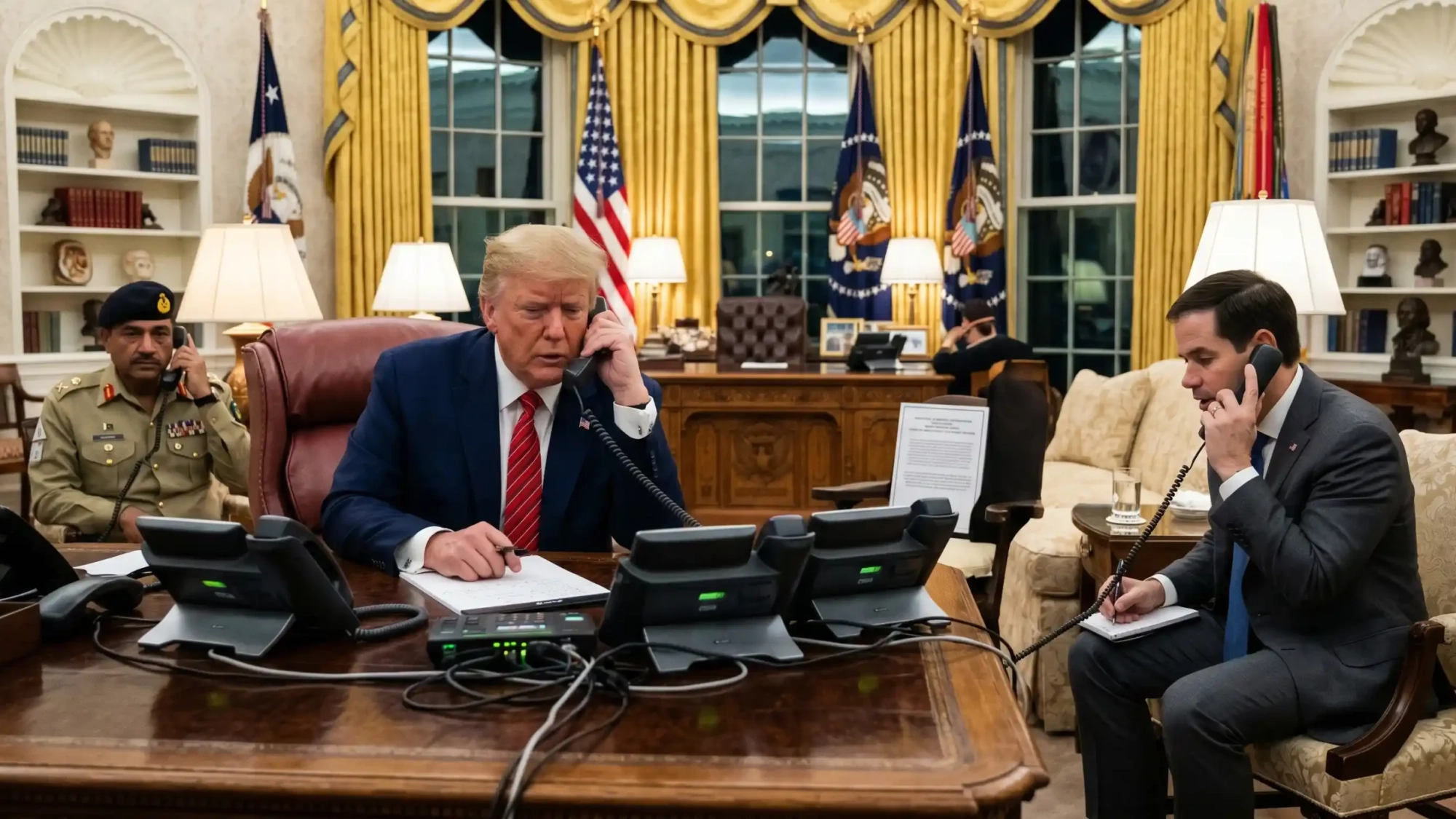
On Saturday, May 23, 2026, there was an extraordinary event in international relations when the President of the United States conducted one call with the leaders of Saudi Arabia, the United Arab Emirates, Qatar, Pakistan, Turkey, Egypt, Jordan, and Bahrain in the Oval Office at once. Right after that, a separate call took place with Israeli Prime Minister Benjamin Netanyahu.
The topic of discussion was Iran – and the interests involved are too high to play down the matter.
Hours after the phone conversation ended, Trump published on Truth Social that a crucial deal with Iran has been largely discussed and will be announced shortly. Today, May 25, The Washington Post reported that the US and Iran have agreed on a plan to extend the truce for another 60 days until the Strait of Hormuz is demined and opened again. And to comprehend this complicated situation, it is important to learn about the demands and interests of all the parties, including the role of Pakistan.
Background: How Did the US-Iran Conflict Start?
The current US-Iran conflict took a dramatic turn in late February 2026 when the two countries engaged in military clashes in and around the Persian Gulf region. This led to the closure of the Strait of Hormuz, the narrow strip of waters that account for about 20% of the total worldwide traded petroleum, sparking an international energy crisis according to the Gulf nations. Prices of oil shot up, inflation rates in the US hit record highs, and global market uncertainties prevailed.
President Trump imposed a number of deadlines on Iran to restore access to the strait – first March 21, then March 23, and later on April 7, threatening military action against Iranian energy, bridge, and power facilities in case Tehran failed to respond. On April 8, Pakistan managed to arrange a temporary two-week ceasefire that was conditioned on the mutual cessation of airstrikes. Pakistani Field Marshal Asim Munir was the only medium of contact between Washington and Tehran overnight.
The ceasefire has been repeatedly prolonged since then. The two parties continue with the imposition of their blockades, meaning that each has remained resolute about its positions and demands.
What Was the Goal of Trump’s Call to Various Countries?
Based on information provided by various sources such as Fox News and Arabic media outlets, the goal of the conference call was “to discuss the draft agreement with Iran and hear their views.”
However, there were several other goals for the call.
Creation of an international coalition against Iran. By gathering the region’s most prominent Islamic countries in one telephone conference, Trump was showing Iran that all of its neighbors, including Muslim-majority countries, are supporting peace talks to end this crisis. The Gulf States, which include Saudi Arabia, Qatar, and the United Arab Emirates, are calling on Trump to take diplomacy seriously before starting another war, because it will ruin their economies.
Laying the groundwork for Abraham Accords 2.0. According to two sources close to the matter, Trump told the leaders on the phone call that if a deal is struck, he wants them all to sign peace treaties with Israel, thus expanding the framework of the Abraham Accords. It is clear that reaching such a deal is not just about the ongoing confrontation but also about creating a foundation for President Trump’s grand plan for the Middle East region.
Pakistan’s special role. The participation of Pakistan in the phone call cannot be seen as just a symbol. Field Marshal Asim Munir came to Tehran the very next day to discuss the situation with his counterparts from Iran. As it has already been mentioned above, Pakistan is the main back channel connecting the two countries during the current conflict. It can be assumed that this person enjoys a good reputation among both parties. Pakistani Foreign Minister Ishaq Dar characterized the call “as an important step towards realizing our common goal of regional peace, stability, and swift diplomatic resolution, as reflected by the accomplishments achieved in these negotiations.”
What Does Iran Really Want?
It’s here that the deal-making process gets tricky – and that, despite all signs pointing toward a successful agreement, nothing is guaranteed just yet.
There are several items on Iran’s wish list, which has been outlined in their Ten-Point Plan, according to numerous statements made by Iranian officials to Reuters and other news sources.
- The Straight of Hormuz. In its demands regarding shipping through this narrow passage, Iran has included its right to impose a toll based on different fees depending on ship type, cargo, and conditions. The US side has staunchly refused to accept this, as they see it as a way for Iran to assert dominance over the international waterway. The current framework seems to suggest that the straight be opened without fees and that discussions concerning control over it take place within a 60-day period.
- Frozen assets. The Islamic Republic of Iran claims $25 billion or more of its frozen funds in foreign banks due to several decades of economic sanctions imposed against it. The return of those funds is one of the key requirements put forward by Iran as a part of any final agreement. The US government’s representative in CNN on Sunday said that the liberation of frozen Iranian assets will take place only after the Strait of Hormuz is open again; the US does not want to return its funds before that.
- War reparations. Iran seeks financial reparation from America for the damage incurred in the course of the military conflict — the strikes inflicted upon infrastructure, energy facilities, and civilian objects. In political terms, this requirement will probably be the most challenging one for Washington since Republican senators Lindsay Graham, Ted Cruz, and Roger Wicker strongly oppose it.
- Security assurances. As reported by an Iranian negotiator to his Pakistani colleague this week, Iran would not give up its “legitimate rights” and was highly suspicious of America’s intentions in particular, believing that any deal would be a ploy to launch new strikes after relaxing their guard. According to Vali Nasr, former adviser at the State Department, Iran faces a tough decision: “The agreement on the table is one that favors Iran, but Iran does not feel confident enough that it is not rehearsing for war, either today or in 30 days.”
- Nuclear programme. The future of Iran’s nuclear enrichment program is the most controversial topic, being reserved for discussion until the next round.
The Situation at Present
According to a report from the Washington Post on Sunday May 25, 2026, a ceasefire extension framework for sixty days has been created whereby the Strait of Hormuz will be demined and reopened while both sides pursue a deal. The Iranian foreign ministry referred to the ceasefire agreement as a memorandum of understanding as a first step towards more detailed negotiations to take place within thirty to sixty days.
The US Secretary of State, Marco Rubio, who previously had called for a contingency plan for Iran’s refusal to reopen the strait, stated there had been “some progress” made towards reaching an agreement. Trump mentioned details were being hammered out prior to making an official statement.
The speaker of the Iranian parliament noted this week that the military capability of Iran’s forces has been restored from losses sustained in the conflict – a note that even though Iran may have had difficulties during the war, it was still able to negotiate from strength.
Implications for Pakistan
The involvement of Pakistan in this crisis has been remarkable, and should not be understated. It was Pakistan that facilitated the ceasefire reached on April 8. It was Pakistan that served as the exclusive medium through which Washington and Tehran communicated throughout the period when the crisis was at its most precarious point. It was Pakistan’s army chief that arrived in Tehran prior to the Saturday phone call, and it was Pakistan’s foreign minister that characterized the results of that call using words such as “optimism.”
This is not an ancillary role in a crisis; Pakistan has assumed the mantle of being the only mediator of consequence in what is undoubtedly the greatest geopolitical crisis of 2026 – and its relevance globally cannot be understated.
Why the Deal is still Far from Being Guaranteed
Experience teaches us to have some doubts. Previous negotiations between America and Iran at the beginning of 2026 resulted in the USA dropping bombs on Iran instead of negotiating. Iran’s skepticism regarding American policy is evident; moreover, Iran’s domestic situation makes it difficult for the country to negotiate with America. The hardliners in the Revolutionary Guard do not make it easier to come to an agreement.
Republicans in the Senate already say that any deal leaving Iran with leverage over the Strait of Hormuz will be a historic mistake. Trump is facing the prospect of a united front against him in Congress, especially after the Senate voted to restrain Trump’s power to start a new war.
However, should the 60-day period prove true, the extra time gained will be very useful? Nevertheless, the really tough issues, such as uranium enrichment, war compensation, long-term lifting of sanctions, and strait control, have not been solved yet. The upcoming two months will reveal whether this period results in a significant breakthrough or a new collapse in the region.
References:
The above analysis was made using verified information from reliable sources: the Washington Post, CNN, Al Jazeera, Fortune, UK House of Commons Library Research Briefing, and the Arab News Agency, within the timeframe of April to May 25, 2026.
Leave A Comment