
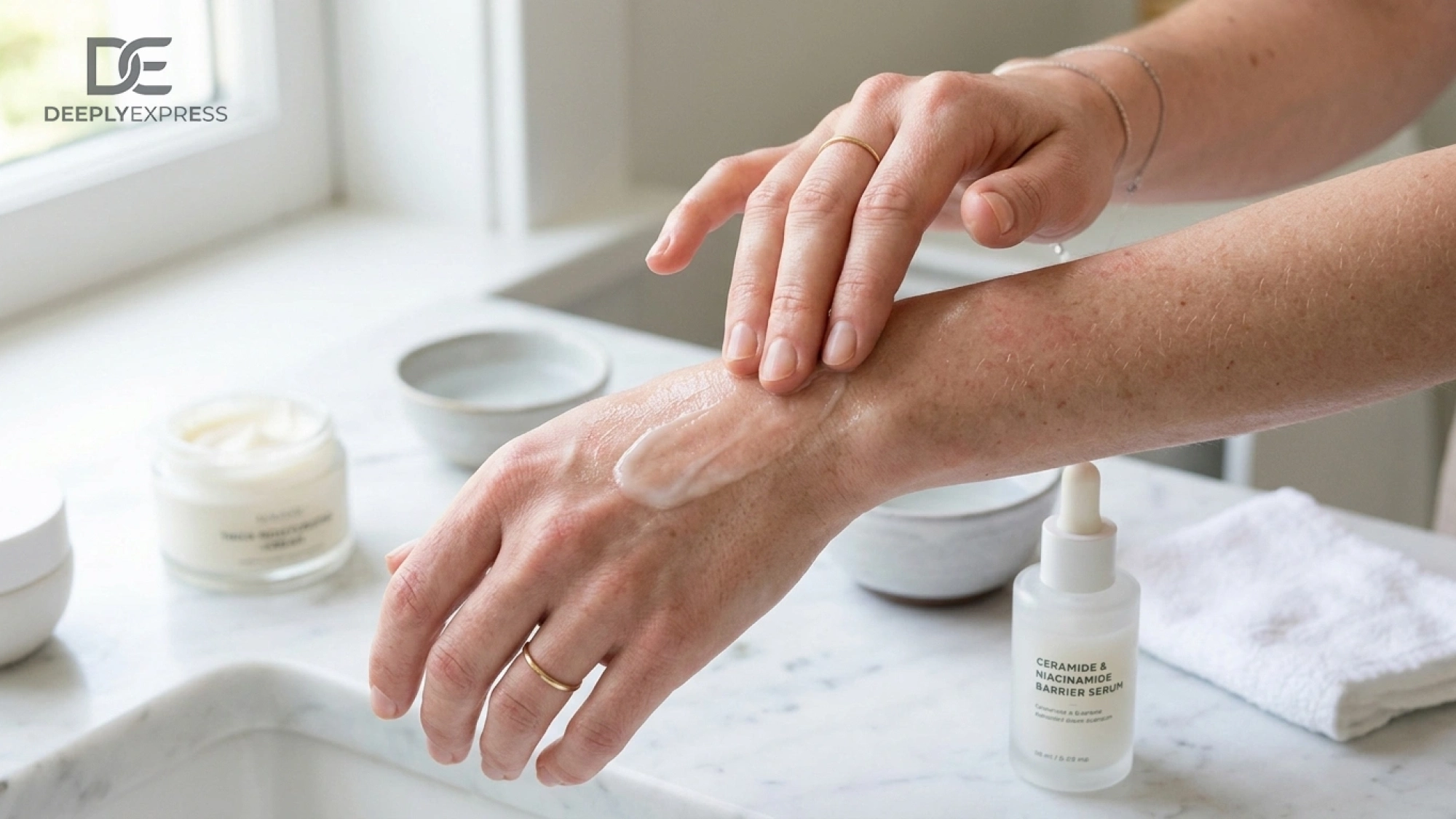
Should your skin be causing issues for you lately but none of your actions seem to actually resolve them, it is most likely not because of the products you have used. Your skin barrier is the issue at hand, and resolving it is an entirely different issue from curing acne or dryness.
The condition of your skin barrier is the core topic of discussion for skincare in 2026, and here is why. All you need to do is understand what the skin barrier does and how it gets damaged, and everything else will be quite simple after that.
What the Skin Barrier Actually Does
Your skin barrier, known as the stratum corneum in dermatology, is the outermost layer of your skin. Comprised of dead skin cells encased in a matrix of lipids including ceramides, fatty acids and cholesterol, think of it as a brick wall, whereby the cells are bricks and the lipids are the mortar.
As long as that wall stays intact, there are two things it does incredibly well. First, it retains moisture in the skin and keeps everything that could cause irritation out of the skin. When it doesn’t, moisture leaves and the skin gets dry and reactive while everything else gets in more easily.
The problem with a compromised skin barrier is that it appears to be multiple issues rolled into one. Redness, post-wash tightness, dryness unresponsive to moisturizer, and sensitivity to products you’ve used without problems for years are all symptoms of a compromised skin barrier rather than separate issues requiring five different treatments.
How to Damage Your Skin Barrier
Before we go into fixing your skin, we have to know what damages it first.
- The most frequent cause is over-exfoliation. Exfoliants are potent, whether it is in the form of chemical AHAs, BHAs and retinol, and frequent usage causes the removal of the lipid layer at a rate higher than the skin can regenerate. If you’re using exfoliants more often than twice a week, cut down while you heal.
- Cleansers that give you that tight feeling post-washing are stripping away the natural lipid barrier of your skin. “Squeaky clean” is not necessarily a good thing — it just means you’re stripping off your skin’s lipid layer.
- Hot water and long baths strip away the oils in your skin. Cooler temperature and less bathing time are helpful tips to adopt during this process.
- Environmental stressors — low humidity, pollution and wind — all contribute to damaging the barrier over time. This is why our skin condition deteriorates during winter.
- Physical stress and lack of proper sleep affect your skin barrier function negatively. Psychological stress has been found to increase skin permeability and weaken the barrier.
The Four Ingredients That Actually Help
There are thousands of products claiming to protect the skin barrier. All of them feature the same basic four ingredient types.
Ceramides
Ceramides are the most direct approach to fixing the skin barrier. Ceramides are a part of the lipids that naturally reduce due to age, excessive sun exposure and cleansing. Ceramides can really help restore the barrier when applied consistently. They can be found in formulas containing ceramide NP, AP or EOP.
Hyaluronic Acid
Hyaluronic acid helps to hold moisture in the skin and therefore it promotes barrier function indirectly by hydrating the cells. In order to achieve the maximum effect from hyaluronic acid, you need to apply it onto damp skin and lock it in with a moisturizer.
Niacinamide
Niacinamide repairs the barrier by stimulating ceramide and fatty acid production inside the skin. It is also a very safe ingredient for the skin and it is well tolerated by all skin types. The optimal concentration is between 2 and 5 percent.
Colloidal Oatmeal
Colloidal oatmeal has been proved to have a good effect on skin barrier and it is widely used in many barrier-repairing creams.
Repair Routine, Step-by-Step
During barrier repair, simplicity, not complication, should be the aim. Keep things simple while adding in the proper complementary products.
Morning
Cleanser with lukewarm water or a fragrance-free cleansing product. Apply a few drops of hyaluronic acid on damp skin followed by a ceramide-containing moisturizer. The last step should be applying sunscreen. Sunscreen is mandatory when repairing because the sun’s rays can cause direct damage to the lipids that make up the barrier.
Evening
Gentle cleansing. Niacinamide serum, if available, and then proceed to the ceramide-based moisturizer. That is the whole routine. No retinoids, acids, or Vitamin C until your barrier is repaired.
Give this stripped-down routine at least four to six weeks before starting anything else. Patience is one of the most underrated ingredients in skincare.
To learn more about how the Korean skincare approach deals with barriers, take a look at our article called K-Beauty Glass Skin for Beginners, which outlines the concept behind the popularity of barrier-focused skin care from Korea.
For more information, check out our article on Red Light Therapy at Home since some home kits have been tried out along with barrier skin repair routines.
Frequently Asked Questions (FAQ)
How Long Does It Take to Repair My Skin Barrier?
It usually takes about four to six weeks of consistently using a skin barrier-oriented routine for most people to start noticing the improvements. It might take longer in case of much damaged skin barriers. The decisive factor here is the cessation of all those activities that are damaging your skin.
Is It Possible to Use Retinol With a Damaged Skin Barrier?
No, you shouldn’t do that while repairing it. Retinol increases the turnover rate of the cells and thus helps to resolve many issues with your skin. However, it is irritating when repairing the skin. Thus, most dermatologists suggest waiting four weeks before applying it.
Does Water Help Restore the Skin Barrier?
Water hydration helps to maintain general skin health but does not help to restore a damaged skin barrier. The skin barrier is more of a structural problem with regard to lipids, and not about water alone. One requires topical products to help restore the lipid layer.
How Does a Damaged Skin Barrier Differ From Dehydrated Skin?
Dehydrated skin is devoid of water and can be fixed using humectants and moisturizers. Damaged skin barrier lacks the structural strength to retain water or to repel irritants. The distinction is important in terms of treatment methods, which although may overlap.
Leave A Comment