
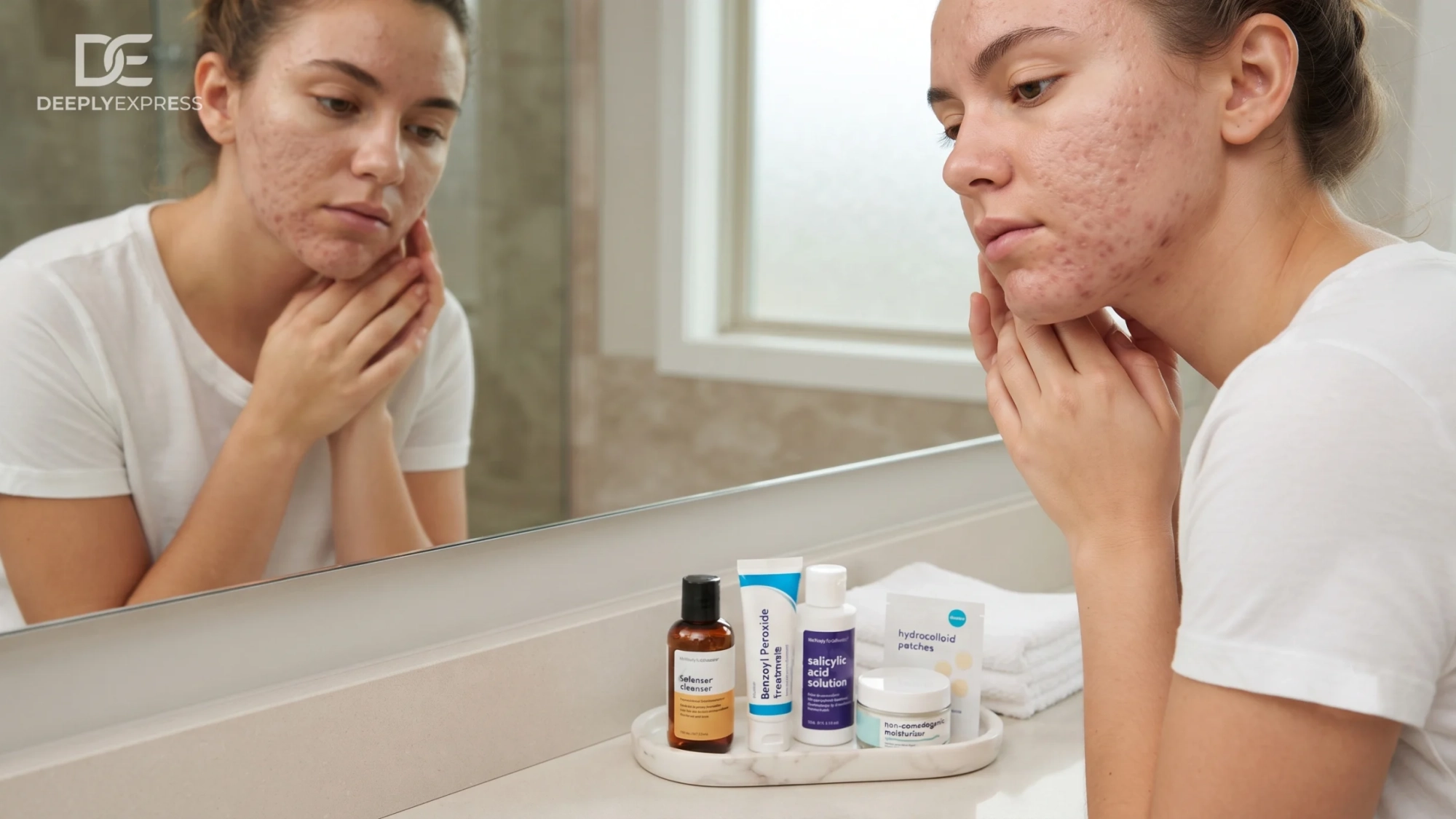
Acne can sometimes make individuals feel like they are fighting their own skin.
One month they purchase a cleanser; another month they use a cream, bar soap, oil, mask, or any herbal solution. Each time there is a new product, there is always hope; however, constantly changing products may actually irritate the skin even more.
The first thing one needs to do for proper acne treatment is realize that acne is not just one disease. For example, black heads, white heads, red pimples, puss spots, nodules, and cysts all need a different approach.
Moreover, acne does not happen because of dirty skin or blood. Acne happens because of hair follicle infection with oil, dead cells, inflammation, and other physiological changes. There are certain bacteria called Cutibacterium acnes which may play a part in causing inflammation, yet acne is not an infectious disease.
WHAT CAUSES OF ACNE?
Several related causes of acne exist.
- EXCESS SEBUM PRODUCTION
Hormones can cause the body to produce excess sebum, which is the oil the body produces. The excess oil can mix up with dead skin cells within a follicle.
- BLOCKAGE OF PORES
When dead skin cells and excess oil build up in a follicle, a whitehead or blackhead may be formed.
Blackheads do not turn black due to dirt but rather because their color is produced when substances in an open pore interact with oxygen.
- INFLAMMATION
Inflammation can occur in blocked follicles causing reddening, swelling, warmth, pain, or pus.
- CHANGES IN HORMONE LEVELS
Although acne usually starts during adolescence, changes in hormones can affect older people as well. Women experience acne flare-ups during menstrual cycle changes, pregnancy, menopause, or use of hormonal therapy.
Severe acne that persists along with irregular periods, excessive hair on the face or hair loss from the scalp may indicate a need to consult a doctor to check hormone-related problems.
- FAMILY HISTORY
Individuals with a family history of severe acne cases are more likely to develop acne themselves.
- PRODUCTS FOR SKIN AND HAIR
Oily make-up, pomade, oil, conditioner, and hair styling products can clog the pores in some individuals. You can use products that indicate “oil free,” “non-comedogenic,” or “do not clog pores.”
- MEDICINES
Some medicines could also lead to acne-type breakouts. Do not discontinue medicines without advice from the prescribing individual.
- STRESS
Although stress might not necessarily cause acne, it could increase the breakouts. Stress triggers hormonal fluctuations in the body. Additionally, stress behaviors like poor sleeping habits, face touching, and skin picking could make the matter worse.
IS ACNE CAUSED BY A PROBLEM IN THE BLOOD?
The concept of “dirty blood” as the cause of acne is widespread. However, it is not an adequate scientific definition of the process in normal acne.
Acne starts in the pilosebaceous unit, where there is a hair follicle and sebaceous gland. Acne is affected by oil, clogged pores, inflammation, hormones, genetics, and skin bacteria.
There can be underlying health issues affecting hormones or the state of the skin, but that does not mean acne occurs due to dirty blood.
Blood testing is not a routine procedure necessary for all patients with acne. It can be prescribed if there are symptoms of hormone issues or side effects of medications.
WHAT ARE SOME NATURAL REMEDIES FOR ACNE?
There is no universal kitchen remedy for all types of acne.
The best home strategy is the combination of gentle skincare routines and an effective acne component chosen according to the type of outbreak.
Commonly suggested components for treating mild acne include benzoyl peroxide, adapalene, salicylic acid, and azelaic acid. New guidelines from the American Academy of Dermatology confirm their efficacy, adding that there is not enough research to recommend the majority of natural remedies as an acne treatment of choice.
- BENZOYL PEROXIDE
Benzoyl peroxide has anti-bacterial and anti-inflammatory properties. It might be effective for red inflamed pimples.
Using a low concentration may reduce irritation and dryness. According to the American Academy of Dermatology, it is reasonable to start with 2.5 percent concentration in adults.
It bleaches clothes, towels, sheets, hair, and fabrics. So it is better to let it dry before touching any fabric.
- SALICYLIC ACID
Salicylic acid helps eliminate substances that cause clogging of the pores. It might be particularly effective for blackheads, whiteheads, and small bumps.
The use of several products containing salicylic acid simultaneously causes skin drying and irritation.
- ADAPALENE
Adapalene is a topical retinoid that prevents pore blockages and reduces skin inflammation. This product is usually applied to the entire area of skin affected by acne rather than isolated spots.
Retinoids are known for causing irritation at the beginning of their use. In addition, retinoids require certain measures during pregnancy; therefore, professional recommendations should be obtained if one is pregnant or plans to become pregnant.
- AZELAIC ACID
Azelaic acid can be effective in case of pore blockage, bacteria, inflammation, and discoloration left from acne.
HOW DO I TREAT MY ACNE WITH NATURAL METHODS?
Natural treatment of acne doesn’t mean using any household stuff you might find lying around.
Instead, here are some practices to consider.
- Cleanse your face two times a day with a mild cleanser.
- Cleanse your face after excessive perspiration.
- Do not touch your face.
- Resist the temptation to squeeze your pimples.
- Select non-acnegenic products.
- Do not apply oily hair products to your forehead.
- Wash off your makeup before going to bed.
- Change sweaty clothes after exercising.
- Stick to your regimen.
- Control stress levels and get enough sleep.
There are several small studies about tea tree oil use, however, it can be slow to work, and cause irritation, redness, dry skin, or an allergy. Moreover, it must not be ingested, and undiluted oil must not be applied to the skin. There is less proof about alternative acne treatment methods compared to established medicines.
WHAT CAN NATURALLY KILL ACNE?
There is no natural way to kill acne overnight since acne itself is not an organism that sits on top of your face.
There are certain things that can kill bacteria, reduce inflammation or unclog pores but killing acne means more than attempting to sterilize your face.
Too much alcohol, lemon, concentrated essential oils, vinegar, bleach, or antiseptics can irritate your skin making it red, painful and prone to getting dark spots.
It is safer to follow a gentle regime rather than attempt to sterilize your face.
WHAT CAN HELP TO CLEAR ACNE FASTER?
The process of treating acne usually takes some time. If someone says their product can completely clear acne overnight, this needs to be taken with caution.
In order to eliminate an individual skin bump, you might need to use some benzoyl peroxide, salicylic acid, azelaic acid, or any other suitable acne treatment. A hydrocolloid patch can help to protect your skin bump from being touched.
Acne nodule and cysts rarely clear up within one day. In some cases, a dermatologist is able to inject a large and inflamed lesion with medication to speed up the process of reducing pain and swelling.
WHAT MAKES A PIMPLE EXTREMELY DRY THE FASTEST?
It is not always ideal to aim at making the pimple extremely dry.
Excessive drying will only irritate the skin while failing to clear out the clog from the pore. In some cases, it causes burning, peeling, and discoloration.
When you have an open blemish, apply a thin layer of an appropriate acne product. Using more of the product does not mean that the process will be faster.
When the pimple is deep inside the skin and painful, dermatologists advise using a moist warm washcloth for ten to fifteen minutes, three times a day. Be sure to use fresh washcloths every time.
Using a cold compress covered by a clean piece of fabric will just give you relief from the pain and swelling but will not eliminate the pimple.
CAN TOOTHPASTE TREAT ACNE?
No, toothpaste is intended to be used on teeth, not the face.
Even though toothpaste might seem like it dries out a blemish, it contains chemicals that can actually irritate and harm the skin. In particular, dermatologists do not recommend applying it to treat acne.
Dry skin is not necessarily healing skin. A visibly red and flaky area around a blemish is more noticeable and unpleasant than anything else.
CAN VASELINE CLEAR ACNE?
Vaseline, which is also called petroleum jelly, cannot clear up acne and cannot remove bacteria causing acne.
Petroleum jelly might be useful in protecting dry lips and injured skin areas. However, applying it thickly to acne-prone areas could create an unpleasant feeling of stickiness and oiliness.
The American Academy of Dermatology recommends using Vaseline cautiously and applying it primarily to such places as lips only in case of acne.
In case your treatment for acne makes your skin dry, use a non-comedogenic moisturizer.
DOES INCREASED WATER CONSUMPTION REMOVE ACNE?
Water is an element required for overall health and hydration, yet it will not cleanse your pores.
When a person is suffering from dehydration, he may experience improvement in his skin once he gets proper fluid balance in the body. Yet the excessive consumption of water cannot be considered acne remedy because there is no scientific evidence to support it.
Just drink your water and don’t think it will remove all your pimples magically.
CAN STRESS CAUSE ACNE?
There is a strong connection between acne and stress.
Hormones secreted when we feel stressed may affect our skin in such a way as causing irritation and increasing sebum production. Stress can also affect sleeping patterns, eating routines, and even increase skin picking.
The reduction of stress level will not replace your acne medication.
HOW CAN I PREVENT ACNE FROM AFFECTING MY CONFIDENCE?
It’s something that is visible, meaning it may seem to be constantly under the scrutiny of other people, whether or not anyone comments on it.
Acne has been linked to anxiety, depression, low self-esteem, body image, and low quality of life. This can even occur with mild forms of the condition.
Here are some things you can do.
- MAKE YOURSELF UNDERSTAND THAT IT’S JUST SKIN
Your skin has acne. You don’t.
Acne is something that does not reflect how smart, clean, attractive, talented, or valuable you are.
- DON’T KEEP CHECKING THE MIRROR
Checking every couple of minutes increases your anxiety but changes nothing on your skin. Schedule your skin care and then go about your day.
- AVOID TRIGGERS
Try muting those who make you feel ashamed of having normal skin. Most pictures online have been filtered, edited, photographed with professional lighting, or after professional skin treatments.
- APPLY MAKEUP AT YOUR DISCRETION
Individuals who suffer from acne can apply makeup. Select make-up that does not block pores and clean it up before sleep time.
Makeup must be an option rather than an obligation.
- CONSULT A SPECIALIST PROMPTLY
Proper treatment could minimize your physical and psychological problems. You don’t have to wait till the situation gets complicated to visit a dermatologist.
- ASK FOR MENTAL HEALTH SUPPORT
Talk to somebody you can trust if acne has made you feel isolated, hopeless, depressed, or anxious.
Seek professional assistance immediately if you are contemplating hurting yourself.
WHEN HOME CARE IS NOT ENOUGH
Make an appointment with your doctor if you have painful nodules, cysts, scars, recurring dark spots, severe acne suddenly appearing or unresponsive to your efforts.
Consultation is recommended if new acne breaks out along with irregular menstruation, unwanted hair growth, changed medication, or other odd symptoms.
Prescribed therapies can be combined, including topical drugs, antibiotics, hormones, and even isotretinoin. It requires personalized approach and professional control.
OUR FINAL VERDICT
The best home care therapy for acne is not any toothpaste, vaseline, vigorous face washing or special detox.
It is an individualized approach, depending on the nature and severity of acne breakouts.
Begin carefully. Select a single, effective substance. Preserve the integrity of your skin. Don’t pick at acne lesions. Be patient. Make sure to consult a doctor if you have painful, hard-to-treat or scarring acne.
Acne is very common skin disease, it is easily treatable and never occurs because of someone’s failure to take care about himself or herself.
Leave A Comment