
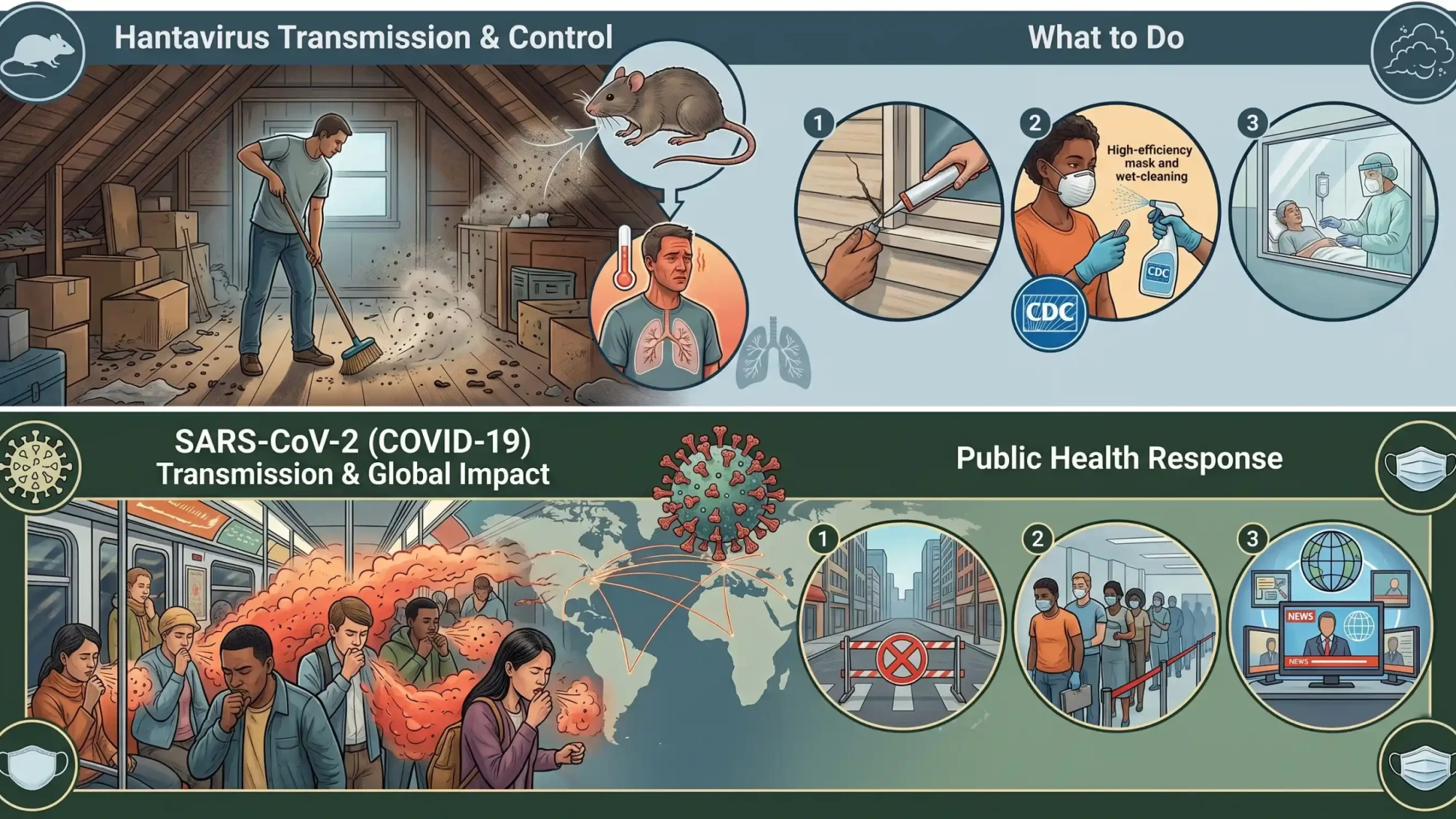
Despite being a family of infectious and lethal viruses found in rodents, there are only extremely low chances of the infection causing another pandemic of such a magnitude, like the COVID-19 situation, since not all types are transmitted from human to human and preventive measures, such as controlling the number of rodents and isolation of patients, are effective.
What is Hantavirus?
Hantavirus is a group of viruses that infect animals, primarily rodents. Humans contract the virus by inhaling air carrying the virus through rodent excreta, handling material contaminated with excreta, and touching the face. In humans, Hantavirus causes Hantavirus Pulmonary Syndrome (HPS) or Hemorrhagic Fever with Renal Syndrome (HFRS).
Will Hantavirus create COVID-style shutdowns?
Hantavirus is not likely to lead to lockdowns similar to those that occurred during the COVID outbreak. The World Health Organization (WHO), among others, has concluded that existing Hantavirus outbreaks, including those in the 2026 ship example, do not pose any threat of a global epidemic due to the inability of the Hantavirus family to transmit like SARS-CoV-2. The Hantavirus transmits from rodents to humans through physical contact, while some strains have been able to transmit from one person to another in isolated cases; nevertheless, transmission has proven to be inefficient.
What to Do (Recommendations)
- Prevent rodent exposure. Seal openings at home, keep food in secure containers, use traps, and clean areas with CDC-recommended wet-cleaning techniques (do not sweep or vacuum).
- Feel sick after being exposed to rodents? See your doctor immediately and inform them of possible rodent exposure (early detection is key for supportive treatment).
- There is an outbreak in your local area? Follow advice from public health authorities—quarantine of affected individuals and contact tracing are all that’s needed for hantavirus cases; there is no need for lockdown measures.
Leave A Comment