
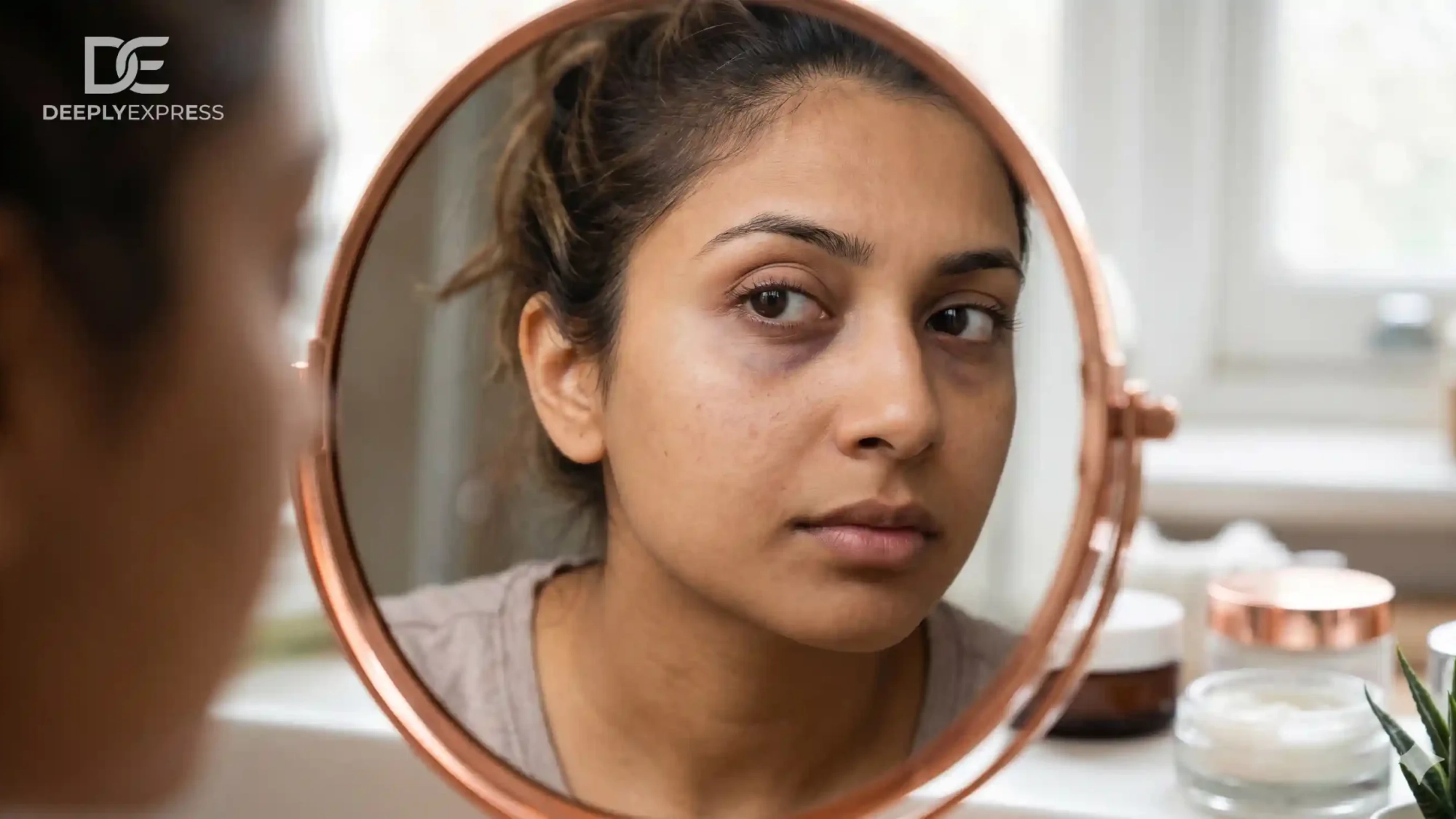
For most people, the moment they look at themselves in the mirror in the morning and recognize that something isn’t right, blame follows instantly. It may be scrolling late into the night or watching an evening movie. Regardless, dermatologists have been telling us this repeatedly for decades, yet many of us fail to realize that sleep is only one element of the bigger picture.
Under-eye dark circles are one of the most common cosmetic concerns all over the globe, irrespective of age, ethnicity, or skin complexion of affected individuals. Unfortunately, they are widely misunderstood and usually perceived as nothing but a case of sleepless nights when the truth lies beneath.
Most importantly, there is no need to spend huge sums of money or undergo any procedure. There are several solutions to the problem that you probably already have lying around your house. However, understanding the exact reasons will help you deal with it better.
WHY DOES THE SKIN BENEATH YOUR EYES FEEL SO DIFFERENT?
The skin right under your eyes is the thinnest on your face. In most people, it almost becomes see-through. This makes even the smallest change in blood circulation, swelling, coloring, or structure of your tissue evident much more prominently on this part of the face.
This is the reason why dark circles can vary so much from one individual to another. Depending on your skin color and the cause of the discoloration, your under-eye shadows can range from blue, to purple, to brown, or sometimes even green. And this difference in appearance is not coincidental; it says a lot about your skin if you understand it.
THE REAL REASONS DARK CIRCLES APPEAR
- LACK OF SLEEP, BUT NOT IN THE TRADITIONAL SENSE
Of course, lack of sleep can cause dark circles to form, but this process needs clarification. When one is deprived of sufficient rest, their body increases the production of cortisol in order to ensure proper functioning of all systems. This hormone increases dilation of blood vessels, especially those located near the surface of the skin around the eye. Since the skin on this area is quite thin, this results in dilation of vessels, creating dark shadows on the face that only get darker with time.
At the same time, insufficient time spent lying down, or too much, will result in accumulation of fluids in the eye area. In such cases, the eyes are prone to swelling, further accentuating existing darkness. Sleeping usually does not help resolve dark circles caused by other factors.
- GENETICS: THE CAUSE THAT GETS THE LEAST ATTENTION
Quite a few studies have proven genetics to be a leading factor causing dark eye rings. According to a clinical study published in 2014, up to 63% of patients who presented with hyperpigmentation around their eyes – the proper name for this phenomenon – had a history of the condition running in the family. Thus, if one or both parents or even grandparents exhibited dark circles under the eyes regardless of whether they got enough sleep, there’s a chance you’re dealing with the same cause.
Some of the genetic factors that lead to under-eye dark circles are such inherent characteristics as thin under-eye skin, a deep tear trough structure, visible blood vessels, and increased concentration of melanin in the area. None of these is an indication of any disease.
- ALLERGIES AND BLOCKED NOSE
This is one people don’t see coming. A blocked nose from seasonal allergies, dust allergies, or a cold causes pressure on the tiny blood vessels in the eye area. These blood vessels dilate and become engorged with stagnant blood flow, leading to dark and puffy skin under the eyes.
The doctors call this phenomenon allergic shiners. If your dark circles seem more pronounced at certain times when there are allergies, chances are you have to look into allergies rather than your sleep time affecting your eyes.
- IRON DEFICIENCY ANEMIA
Iron deficiency is recognized to be the leading cause of dark circles among all nutritional deficiencies. If the amount of iron within the body falls short of the body’s requirement, it results in the reduced formation of hemoglobin, which is the main oxygen carrier in the blood stream. This leads to the overall paleness of the skin, making the vessels under the eye appear darker in comparison.
According to the aforementioned 2014 study, more than 50 percent of the individuals who suffered from dark circles were found to have some sort of anemia. The interesting point is that several individuals noticed positive changes around their eyes after treatment for anemia. In light of this, it seems appropriate to first get yourself checked for any type of anemia.
- DEHYDRATION
The importance of water in regards to your skin cannot be emphasized enough. In cases where the body lacks sufficient amounts of water, there is an appearance of sinking underneath the eyes. This is because the body skin becomes less plump, and the thinning of the skin underneath the eyes forms a sort of shadow that can make one think that the skin color has changed.
Such a dark circle can clear up pretty fast. There have been instances where individuals have seen improvement after a week of consuming adequate amounts of water.
- SUNLIGHT AND OVERPRODUCTION OF MELANIN
Melanin formation is triggered by exposure to sunlight. With continued exposure to sunlight on and around the eyes, especially in the absence of any form of protection, the body may continue to add melanin under the eyes with time. Dark circles that originate from melanin tend to have a brown hue and will keep worsening with age.
Frequently rubbing the eyes also leads to a similar problem. Frequent rubbing of the skin results in an increased level of pigmentation through irritation, where the skin responds by producing more melanin to protect itself. Such persons usually include those with allergies or dryness in the eyes.
- THE NATURAL PROCESS OF AGING
As we age, our bodies produce less collagen and elastin. The fatty layers under our eyes start changing positions and become thinner. Our skin gets weaker and lacks the necessary support from other tissues. It all results in increased visibility of blood vessels and underlying layers causing dark shadows under the eyes that grow deeper as we age. These changes do not indicate anything wrong. On the contrary, they are very predictable in facial anatomy.
- VITAMINS OTHER THAN IRON THAT MAY LEAD TO DARK CIRCLES UNDER EYES
Certain vitamins play a role in under eye darkness according to scientific studies. First of all, vitamin K plays a role in maintaining proper circulation in blood vessels and preventing their clogging, leading to dark circles caused by blood accumulation. Another one is vitamin B12 deficiency, causing anemia and resulting in thinness of the skin. Vitamin C deficiency affects the amount of collagen in the body, thus the structure of tissues. There have been reports regarding the possible effects of vitamin D deficiency on skin conditions and increased inflammation.
HOME REMEDIES THAT WILL INDEED WORK
Just to get something straight right away – home treatments will never cure hereditary dark circles and cannot replace professional help where some kind of health disorder lies behind the problem. But what they can do is to decrease swelling, improve the condition and moisturize the skin and make a noticeable difference in appearance of mild to moderate dark eye circles with continued use. The important thing here is continued use. One-time treatment won’t work. It takes around two weeks of daily application.
- COLD METAL SPOONS OR A CHILLED EYE PATCH
Put two metal spoons in a freezer for 10 minutes. Apply the cold part of each spoon to one closed eye at a time for two to three minutes. This method works because the cold triggers contraction of dilated blood vessels, and therefore it is considered one of the few treatments that will deliver instant results before leaving your house.
As an alternative to spoons, put several pieces of ice in a soft cotton bandage and apply it gently to the area beneath your eyes for 10 minutes.
- CHILLED TEA BAGS
Do not throw out the tea bags you have used after preparing your morning tea. Instead, store them in the refrigerator for 20 minutes and put them on your eyes when they are closed for 10 to 15 minutes.
Either green tea or chamomile tea can be used. The caffeine in green tea acts as a vasoconstrictor that closes the small blood vessels in the eye area. Also, antioxidants in green tea alleviate any inflammation.
- COLD CUCUMBER SLICES
Cucumbers contain around 96% of water in their content. Therefore, applying them to the skin helps moisturize it. Additionally, they have antioxidants, astringents, and vitamin K. Slice them into thick pieces, put them into a fridge for about half an hour, then lie down, close your eyes, and place cucumber slices above them.
It is most effective for removing dark circles related to tiredness and accumulation of fluid. However, for deeper discolorations or shadows, the result will be minor.
- POTATO JUICE APPLIED WITH COTTON SWABS
Potatoes are high in Vitamin C and have natural enzymes that can help improve your skin’s complexion in the long term. Cut the fresh potato into fine pieces, extract its juice by squeezing it into a clean cloth, dip cotton swabs into the juice, and put them under your eyes for 10 minutes.
Try applying this remedy twice or thrice a week. Applying this daily may sometimes lead to skin irritation due to the enzymes present.
- ROSE WATER AND COTTON PADS
Being a mild skin softener, rose water is suitable for use by those whose skin can react to certain products. Dampen two cotton pads with cool rose water and apply them gently over the eyelids while your eyes are closed for 10 to 15 minutes at bedtime. The pads will rejuvenate the tired-looking skin, reduce inflammation, and within a month of daily application, the skin beneath the eyes becomes smoother.
- SWEET ALMOND OIL BEFORE SLEEPING
The vitamin E in sweet almond oil is an antioxidant that protects the skin against damage from free radicals. To use it, put one drop of the almond oil on the tip of your ring finger (the lightest finger) before going to bed and gently massage around the eye area in a circular motion. You can leave the oil throughout the night.
Within four to six weeks of regular use, you’ll find yourself with smoother skin. While the oil won’t significantly brighten or lighten the dark pigmentation around the eyes, it enhances the overall health of the skin so much that all other remedies you may try work better.
- PURE ALOE VERA GEL
The aloe vera plant has aloin, which helps to brighten the skin naturally. Aloe vera also has anti-inflammatory effects on the under eye region. Apply a small amount of pure aloe vera gel under your eyes and keep it there for 15 minutes before rinsing it off with cool water. When purchasing the aloe vera gel, look for one where the first ingredient is aloe vera. The gel should not contain fragrance or alcohol because it can cause irritation to the under eye skin.
- MINT LEAVES FOR IMPROVING BLOOD FLOW
Mint leaves have menthol, which helps in improving the blood flow to the under eye area. Crush a handful of fresh mint leaves into a paste and apply it gently to the area under your eyes. Keep it on for 10 minutes before washing it off with cool water. Another option is to crush mint leaves to extract its juice and use cotton balls dipped in the juice as an application for 15 minutes. This is helpful especially when dealing with blue under-eye circles.
WHAT YOU PUT ON YOUR PLATE MATTERS TOO
If your dark circles happen to be caused by nutritional deficiencies, you won’t get very far with trying to fix the issue externally. The food you eat is a way for your body to support the things you do to solve any issues.
Spinach and kale, for instance, contain both iron and vitamin K in one food. Citrus fruits are a good source of vitamin C which is used for the production of collagen. Blueberries and strawberries deliver antioxidants necessary to protect your fragile skin. Both almonds and walnuts contain vitamin E. Fatty fish (salmon among others) contain omega-3 fatty acids which help keep the blood flowing.
High sodium content in foods leads to water retention and thus adds to puffiness. Alcohol is another ingredient that leads to dehydration. Too much sugar leads to collagen breakdown. This isn’t a rule book that you need to adhere to, but it’s always easier to do things internally when your body is prepared.
WHEN SHOULD YOU CONSULT A DOCTOR?
If your dark under-eye circles suddenly developed, worsen in a short time, and occur in conjunction with signs like fatigue, shortness of breath, dizziness, inexplicable pallor, or puffiness that won’t subside, consult a doctor as these symptoms can indicate such serious conditions as iron deficiency anemia, thyroid disorders, or any kind of organ malfunction. Most of these issues can be determined using a simple blood test.
If your under-eye dark circles are just cosmetic issues and have been there ever since childhood, or there is a clear family history associated with these circles, then a dermatologist can provide you with more focused treatments such as the use of topical vitamin C serums, retinoid creams, clinical peels, or even fillers.
THIS IS WHAT IT BOILS DOWN TO
The fact is that dark circles are rather common. They are never an indication of a dangerous condition, but they definitely tell you a story about the processes occurring inside the body and your lifestyle impacting this area of skin which is thin and sensitive.
If your problem is that you have been complaining about insufficient sleep without making any progress whatsoever, it might be high time to think in other terms. Firstly, make sure you drink plenty of water and include iron, vitamin K, and vitamin C in your everyday diet. Try out one or two home remedies from those suggested above for a period of three-four weeks before making any judgments. Also, if dark circles are profound, persistent, or genetic, consult a professional.
Skin always tells its story when something is not quite right. Dark circles are just one way it speaks. Hearing what your skin says is free, while curing dark circles often is as well.
Published on DeeplyExpress.com | Category: Beauty – This article is purely informative. It is not intended to replace any kind of medical or dermatological advice. Please seek consultation from an appropriate healthcare professional or dermatologist in case of any persisting problems or complications.
Leave A Comment