
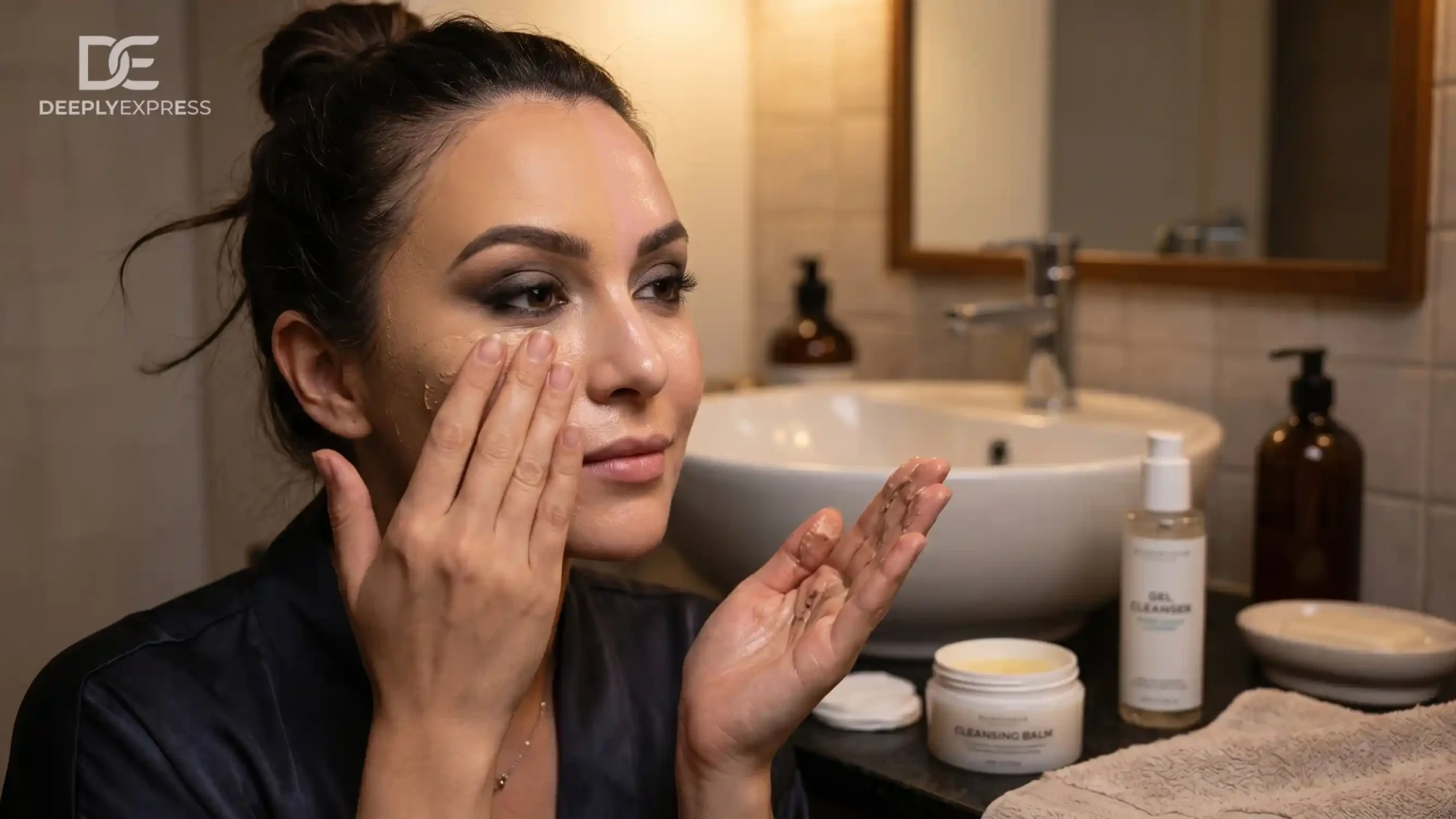
Then there are those who wear heavy makeup out of passion. Or maybe because they don’t really have a choice. Makeup artists, news broadcasters, wedding photographers, spokespeople for brands, salespeople, social media influencers, and many more types of professions wake up early and put on an entire face before most of us even manage to brew our first cup of coffee. By the end of the day, their skin will have endured eight, ten, even twelve hours of being coated in foundation, primer, concealer, and powder.
If this sounds like you, then the question isn’t whether heavy makeup use will harm your skin. Clearly, it will. Rather, the real question is what you can realistically do to counteract any damage.
This post is not about how you should reduce your makeup usage or take some days off from your regular routine. For most of the readers of this blog, this kind of advice would be meaningless since they rely on wearing their full-face makeup every day.
THE PROBLEM WITH HEAVY MAKEUP IS NOT THE ONE YOU THINK OF
When people fear makeup to be detrimental to their skin, one of the first problems that comes into mind is acne. Indeed, clogging up your pores is an issue. But Dr. Cameron Rokhsar who practices board-certified dermatology at the New York Cosmetic Skin and Laser Surgery Center, says that by far, the most destructive behavior associated with makeup is not wearing too much of it. It is wearing it to bed.
By doing so, you leave your pores filled with makeup and thus deny them access to their nighttime regeneration process. This causes skin inflammation, loss of collagen and even fine lines that even the best primer cannot remove. According to survey statistics, a third of all women wear their makeup to bed two times per week.
The second true threat is known as the skin barrier. It consists of skin cells along with lipids. According to dermatologist Dr. Julie Russak quoted in an interview with CVS Health conducted in April 2025, lipids play a role similar to that of mortar in a brick wall. Once the barrier is compromised, the moisture seeps out, and the irritants get inside. Harsh removal or complete lack thereof cause the degradation of the protective layer, which leads to skin stinging, flushing, breaking out, and becoming sensitive even to previously harmless products.
In addition, according to a 2024 scientific article published in the journal Scientific Reports, there were heavy metals, such as chromium, nickel, and lead, found in cosmetics products available via online markets. They included brands produced in countries with looser regulation practices. It should not stop anyone from applying makeup on their skin, but people still need to keep track of where and what they purchase.
TEST YOUR PRODUCTS BEFORE APPLYING THEM TO YOUR SKIN
The person who gave us information upon which we based this post has an idea that must be emphasized here. No matter how luxurious any cosmetic is, it has chemicals, but everyone’s skin may react differently to different chemicals. This isn’t an advertisement slogan. According to the American Academy of Dermatology, more than 15,000 ingredients could cause a skin allergic reaction, while a study conducted in 2021 revealed that irritant contact dermatitis was induced by personal care products in about 39 percent of women who used them.
The way to make sure if your product will suit your skin or not without having a reaction on your face is patch testing, yet most people either don’t conduct such tests at all or conduct them incorrectly.
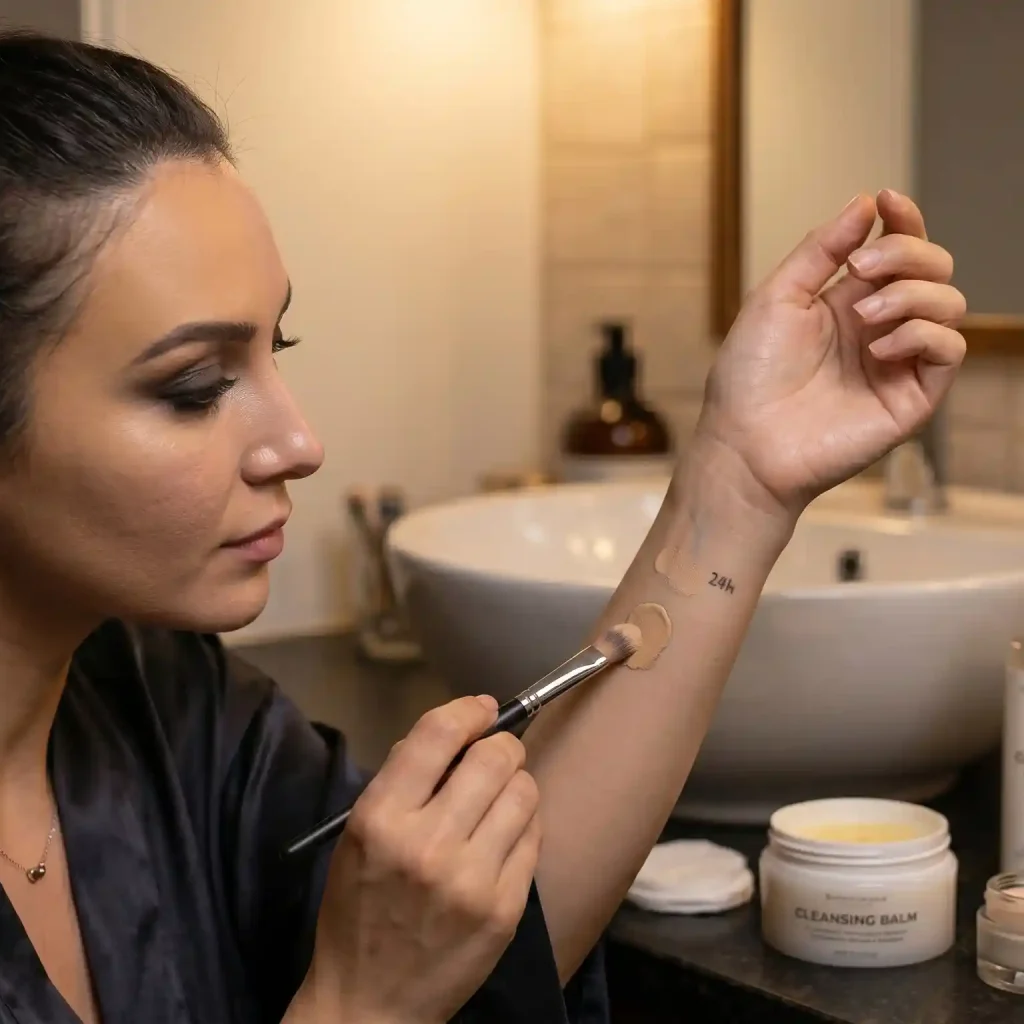
Here’s how you should go about it, as per the advice of the AAD and Dr. Dendy Engelman, a board-certified dermatologist working at the Shafer Clinic of NYC. Pick the inner side of your forearm or bend of your elbow; don’t use the back of your hand as it is more prone to develop irritation due to its thicker and more insensitive skin compared to the skin on your face. Put some of the product, roughly as much as a coin-sized area, and leave it there for a minimum of 24 hours. For highly sensitive skin, leave it there for 48 hours.
In case of any symptoms such as irritation, redness, swelling, or bumps, don’t use that particular item. If your skin is absolutely fine without any signs of irritation, chances are you are good to go, although Dr. Engelman still advises going easy on testing multiple products at once.
An important point to mention here is that using the inner side of your arm for the test would be more relevant since your face is similar to this area in terms of skin type, while the jaw and neck will not do. Testing on your leg tells us nothing about anything, as its skin differs significantly from facial skin.
HOW TO TAKE OFF HEAVY FOUNDATION MAKEUP (AND MOST PEOPLE DO NOT KNOW THE CORRECT WAY TO DO THIS)
If your routine involves using full coverage foundation makeup, setting spray, and eye makeup, then just using a face wipe will not be enough. All the makeup will simply get moved around, and by the time tomorrow comes, all of it will have settled into your pores.
The technique recommended by dermatologists for people who use heavy foundation is something known as double cleansing, where you do exactly what you think you would do in two steps.
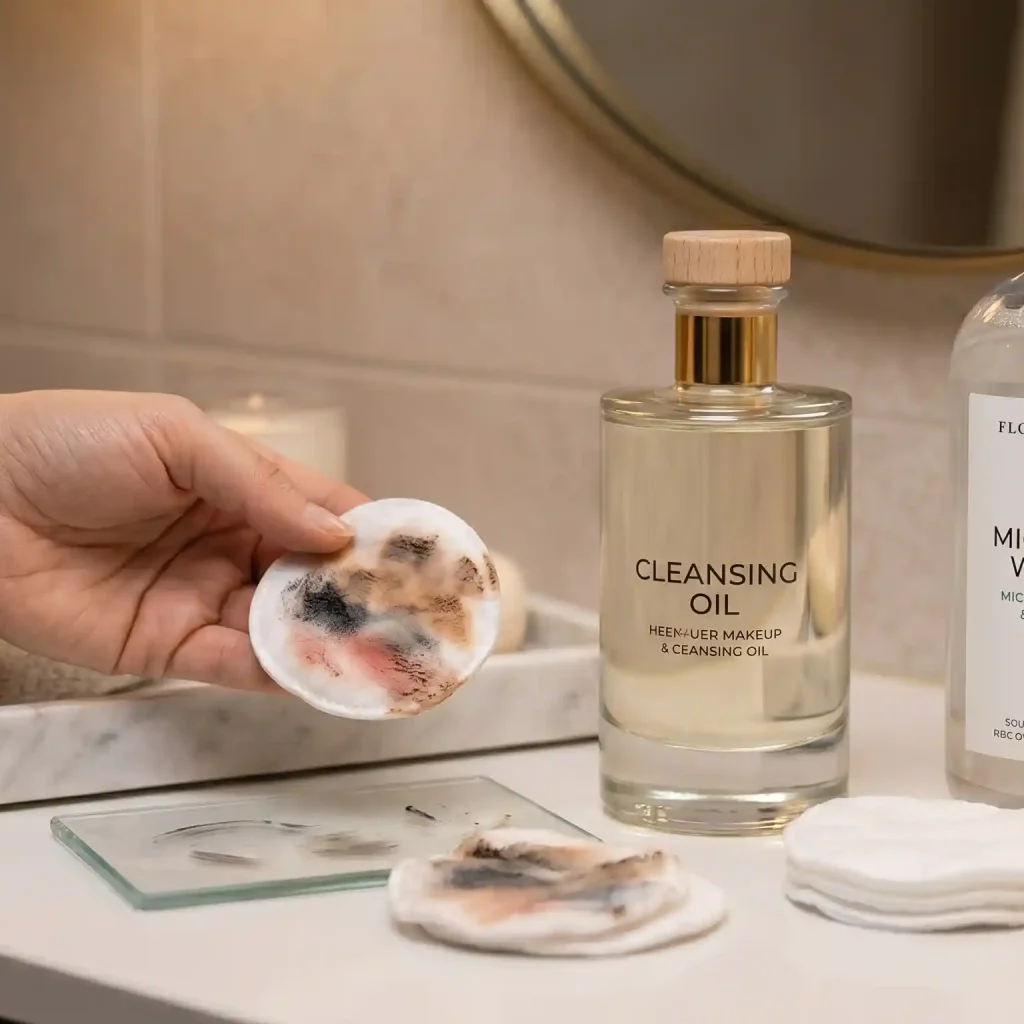
The first step involves an oil-based cleanser or cleansing balm. Dr. Marisa Garshick, board-certified dermatologist at MDCS Dermatology in New York City, makes this point very clear in her article. Makeup products as well as creams used for skincare are lipophilic substances. In simple terms, they can be dissolved using oils rather than water. Hence, a water-only cleanser will not be able to dissolve silicone-based foundations or waterproof makeup products. Oil-based cleanser/balm should be gently massaged on dry skin for 30 to 60 seconds to break down layers properly. For individuals with oily skin, fragrance-free micellar water may be considered as a first step.
The second step involves using a water-based cleanser suitable for your skin type. If you have an oily skin type, this will probably be in the form of a gel or a foaming cleanser, while a cream cleanser would be used if you have dry skin. Using the water-based cleanser helps get rid of everything that has been lifted by the oil-based cleanser and ensures that you do not go to sleep having anything on your skin.
It is important to mention that when cleaning your face, you should use extra caution around your eyes. As a dermatologist, Dr. Mona Foad says that it is crucial because the skin surrounding the eyes is much more fragile compared to other areas of the face. Gently press the area surrounding your eyes with a cotton ball dampened with cleansing oil or micellar water.
WHAT YOU APPLY TO YOUR SKIN BEFORE APPLYING MAKEUP IS IMPORTANT FOR MORE REASONS THAN YOU KNOW
If you apply heavy makeup every day, your skincare routine becomes mandatory for maintaining the health of your skin. This is what helps your skin function despite all of the product you apply to it daily.
There are two components that play a much more important role than others in ensuring healthy skin if you’re applying heavy makeup every day. The first one is the ceramide. The ceramide is a type of fat found naturally within the body and comprises a good percentage of your skin barrier that was mentioned earlier. By applying a ceramide-based moisturizer in the morning before applying makeup, you strengthen this layer before adding any products. As noted by Dr. Geeta Yadav during her interview with CVS Health in April 2025, ceramides, hyaluronic acid, and essential fatty acids can be very useful when combined in a moisturizer.
Next up is niacinamide. This skin-calming B3 compound fights redness, decreases inflammation, and assists in reducing the excessive oil production which tends to exacerbate underneath heavier foundation. According to a dermatology guide released by makeuptutorials.com in 2026, the skincare products that use ceramides for barrier repair are still effective despite any light makeup applied on top of them during the day.
Another thing many people who wear heavier makeup do not expect is the following – the SPF included in your foundation simply won’t suffice to protect your skin from harmful sun rays. This fact is confirmed by Dr. Ariel Eber from the University of Miami Health System. While most contemporary makeup products do offer some amount of UV ray protection, dermatologists always emphasize the need to apply your separate SPF 30 or higher underneath your makeup. Foundation wears off, changes color, and is frequently adjusted during the day. Sunscreen stays in place.
WHAT IS IN YOUR MAKEUP AND WHY IT IS IMPORTANT WHAT YOU SEE ON THE LABEL
The European Union is considered to have the most rigorous cosmetic laws today because all products must go through a premarket safety assessment, while more than 1,300 ingredients are banned for cosmetic use. Other markets do not have equally rigid laws regarding this question. If you order makeup online from an international site and buy products that appear unusually cheap, you never know exactly what will be inside.
Two groups of ingredients need to be highlighted when you look at labels. First, parabens are preservatives used in cosmetics. The EU has introduced some legislative restrictions on the amount of parabens that may be included in cosmetic products, and these substances often irritate the skin of sensitive people. Second, fragrance is another ingredient whose presence means that something else might also be added to mask the scent. Unscented makeup products and fragrance-free makeup products are not the same things.
If an ingredient is marked as “noncomedogenic,” this indicates that it was made to be non-clogging. This is very important when you are considering purchasing foundation or primer that will be worn on a regular basis.
GIVE YOUR SKIN A CHANCE TO RECOVER
If your schedule allows you at least one day a week where you are free of makeup, your skin recognizes it. This is the time when your pores can breathe because there’s nothing resting on them, when your skin barrier gets a chance to repair itself better, and when the irritation of the week gets a reset.
On those days, your skin-care routine should be kept to the minimum. The ideal skin care regimen is one cleanser, one ceramide lotion, and sunscreen, according to most dermatologists. It is wise not to put too many active ingredients into your skincare routine on these days unless advised by your dermatologist, because it could worsen the skin’s condition.
PAY ATTENTION TO YOUR SKIN WHEN SOMETHING DOES NOT FEEL RIGHT
If you experience itching, burning, consistent redness, or new breakouts within days of introducing a new product, your skin is telling you something important. Many people ignore these signs thinking that the situation will resolve itself in time. Sometimes it does, but usually, it indicates your skin reacting to some ingredients used in a product.
In case of an intense reaction, immediately wash the product with cool water, do not reapply, let the skin settle for a while before using anything else. In case your reaction lasts more than several days or you experience regular reactions towards a particular product, it may be wise to consult a board-certified dermatologist for professional patch tests. The main benefit of professional patch tests is the ability to detect the allergens precisely, rather than only the fact of their reaction, to be aware of those ingredients in future products. Wearing lots of makeup does not necessarily mean having unhealthy skin. It is all about taking care of your skin by choosing your cosmetics consciously. This is a practice, not a sacrifice, and it plays an enormous role compared to any product.
FAQ: PEOPLE ALSO ASK
• CAN I APPLY HEAVY MAKEUP DAILY WITHOUT HARMING MY SKIN?
Yes, but only if your removal and skin care process is done consistently. According to board-certified dermatologists, the main problem caused by heavy makeup isn’t the makeup, but the improper removal of the product, wearing it for too many hours, or forgetting about the crucial morning step that helps your barrier get protected prior to applying anything else. Heavy makeup can be applied on a daily basis when you double cleanse your face daily, apply ceramide moisturizer in the morning, and have at least one break day each week.
• HOW LONG SHOULD ONE PATCH TEST FOR USING A NEW MAKEUP ITEM?
It is advised by the American Academy of Dermatology that one wait for at least 24 hours before coming to any conclusion regarding the effect of patch testing. But in case one has a sensitive skin type or has had some previous reactions to cosmetic products, it is always better to extend this period up to 48 hours as it makes the test result much more accurate. It is advised that one apply the product on the inner part of the arm or the elbow joint instead of the palm.
• WHAT IS THE PROPER WAY TO GET RID OF THE FULL COVERAGE FOUNDATION?
Dermatologists suggest double cleansing for those individuals who use full coverage or waterproof foundation. Begin the process with oil based cleansers or cleansing balms applied on dry skin in circular movements for 30-60 seconds in order to loosen the layer of the foundation, followed by water based cleansers appropriate for your skin type. Simply rinsing or wiping your face will not help as silicone foundation will stay in your pores and lead to pimples in time.
• DO I NEED SUNSCREEN IF MY FOUNDATION ALREADY HAS SPF?
Yes, you should use it anyway. As Ariel Eber, a dermatologist with the University of Miami Health System, notes, very few people put on their foundation in sufficient amounts to achieve the indicated SPF level. Plus, the makeup can be transferred, rubbed off, and altered through other factors during the day that do not affect a regular sunscreen. Put on a sunscreen lotion with SPF of 30 and above prior to your primer and foundation; view the SPF of your foundation as additional protection rather than primary one.
• WHICH INGREDIENTS IN MAKEUP ARE MOST LIKELY TO IRRITATE SENSITIVE SKIN?
The use of fragrance is one of the most widespread causes of irritation and allergic reactions on the skin in cosmetic consumers, and it is present in way more products than people tend to think about. Another widely used ingredient that may irritate sensitive skin is the group of parabens – preservatives that are often found in various foundations, concealers, and skin care products. One important difference to be aware of: the term “unscented” does not mean “without fragrance”, as the former implies using other compounds to mask the fragrance.
Have you seen DeeplyExpress skin related post? You must see it and take care of your skin.
Leave A Comment