
Geopolitical Changes in the Middle East and Their Effects on Capital Flows
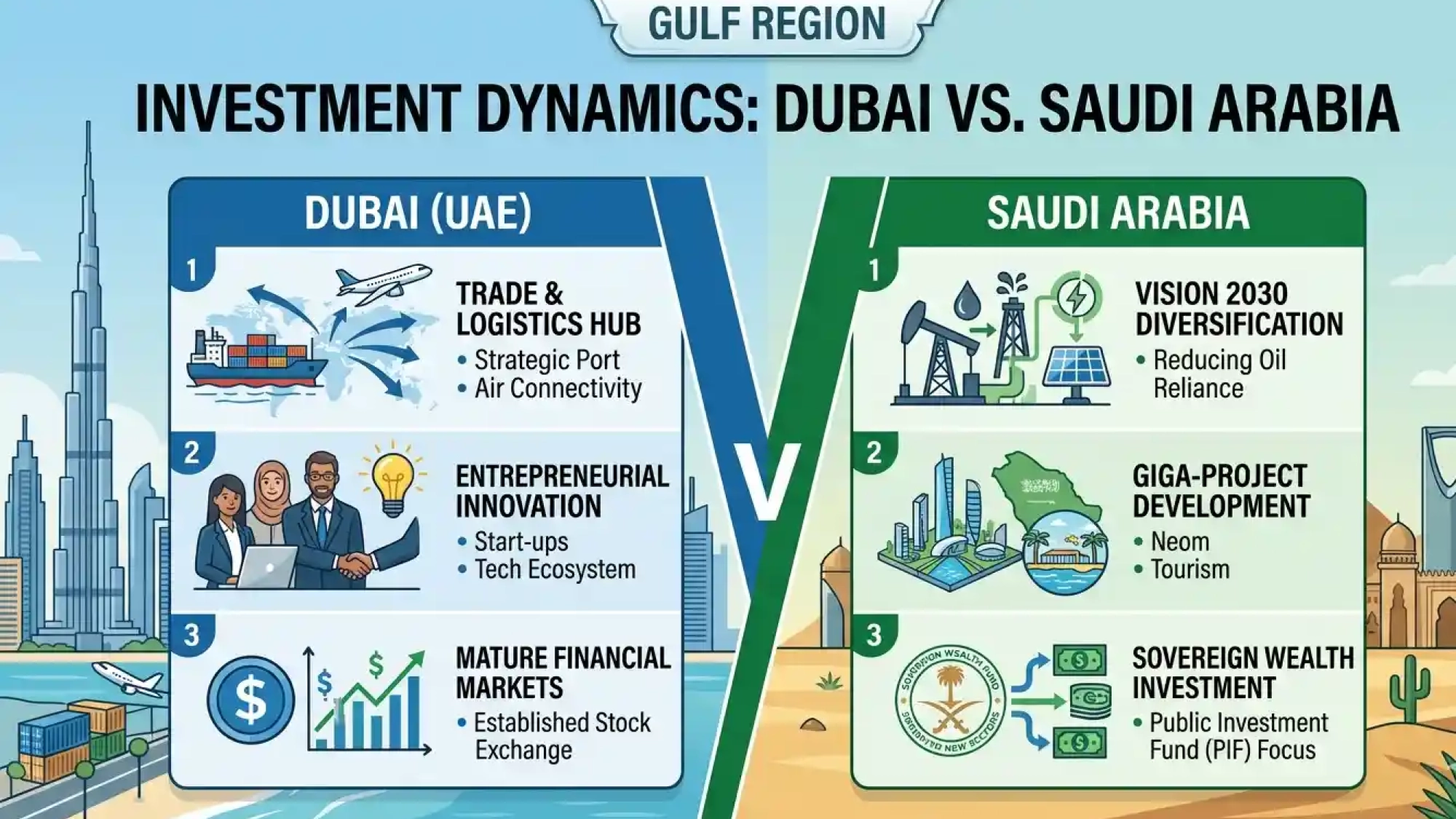
For decades now, geopolitics in the Middle East has been a key determinant of capital flows within the region. The recent events involving both regional and international stakeholders have added a new element of unpredictability that investors have had to take into account. This paper will investigate the role played by changing investor perspectives and demographics in Dubai in increasing investment flows into Saudi Arabia.
Real Estate in Dubai: Trends and Associated Risk Factors
For years, Dubai has been considered to be a safe, stable investment zone attracting foreign money due to its unique branding featuring luxury property, low taxes, and liberal regulations. It remains the key region for diversifying real estate portfolios and investing in the Gulf area.
Some current trends are the following:
- Declining demand for extremely luxurious property. Speculative investments in luxurious property have become less frequent due to the cautious attitude of Western investors and some HNWIs towards new acquisitions.
- Population in non-luxurious areas consists of important employees. The workers and middle-class people inhabiting commercial and industrial regions contribute to the development of the economy without participating in luxury real estate deals.
- Investment preferences related to liquidity. Some investors decide to shift from certain types of assets to others, considering that they involve fewer risks.
It should be pointed out that despite the above factors, there are still positive attributes making Dubai desirable for investors. Nevertheless, being close to conflict areas, it has become more dangerous to invest in this region.
Why Investors Are Rethinking Gulf Risks
Capital investments are fast to react to geopolitical risks. As soon as great powers are part of the conflict, the cost of capital goes up, and higher thresholds emerge. There are several reasons why the assessment of Gulf risks is being reassessed:
- The flight-to-quality principle. Money flows toward investments where clear sovereign backing exists or demand is high due to strong domestic backing.
- Diversification within the region. Investors who previously invested all their resources in a particular Gulf economy now seek diversification.
- State backing and large projects. Major projects backed by governments and funded for a long time become increasingly appealing when risk is high.
Saudi Arabia’s Vision 2030 as an Alternative Destination
Vision 2030 in Saudi Arabia constitutes a state initiative to diversify the country’s economy away from oil dependency. Its size and the nature of funding and projects implemented through it offer a good case as an alternative destination that may receive the redirected investments.
The reasons why Vision 2030 is likely to attract redirected investments:
- Large domestic market. Saudi Arabia boasts of having a large and young population to cater to its market needs.
- Giga projects funded by the government. Projects like NEOM, the Red Sea Project, and Qiddiya have the backing of the government and sovereign wealth funds, making their ventures secure and attractive to investors.
- Economic diplomacy and regional stability. Initiatives to improve Saudi Arabia’s regional ties and emphasize economic diplomacy may attract investors.
None of the above points will definitely lead to capital movement from Dubai, but it presents itself as an alternative worth considering.
Scenario Analysis and Strategic Implications
Short-term considerations include how long this ceasefire lasts. This can be seen through two possible scenarios below:
- Ceasefire continues, leading to de-escalation of conflict. The Dubai market could regain strength due to renewed confidence among investors, ensuring its position as a regional finance and lifestyle destination.
- Escalation or continued instability. The structural changes in the region may continue, seeing the shift of money and projects to countries considered more immune to the conflict.
Institutional and individual investors should consider a diversified approach, allocating investments to all of the Gulf markets with assets backed by a sovereign entity or an institution.
The geopolitical environment in the Middle East region is influencing investor decision-making. While Dubai continues to maintain its strengths, rising risks in the region have created a window of opportunity for Saudi Arabia’s Vision 2030 project to benefit from diverted investments. There is a need for prudent and data-driven investment practices that address both immediate risk considerations and future possibilities. This study highlights the dynamics at play within the regional investment environment and provides insights into the potential impact on future investment flows
Leave A Comment