
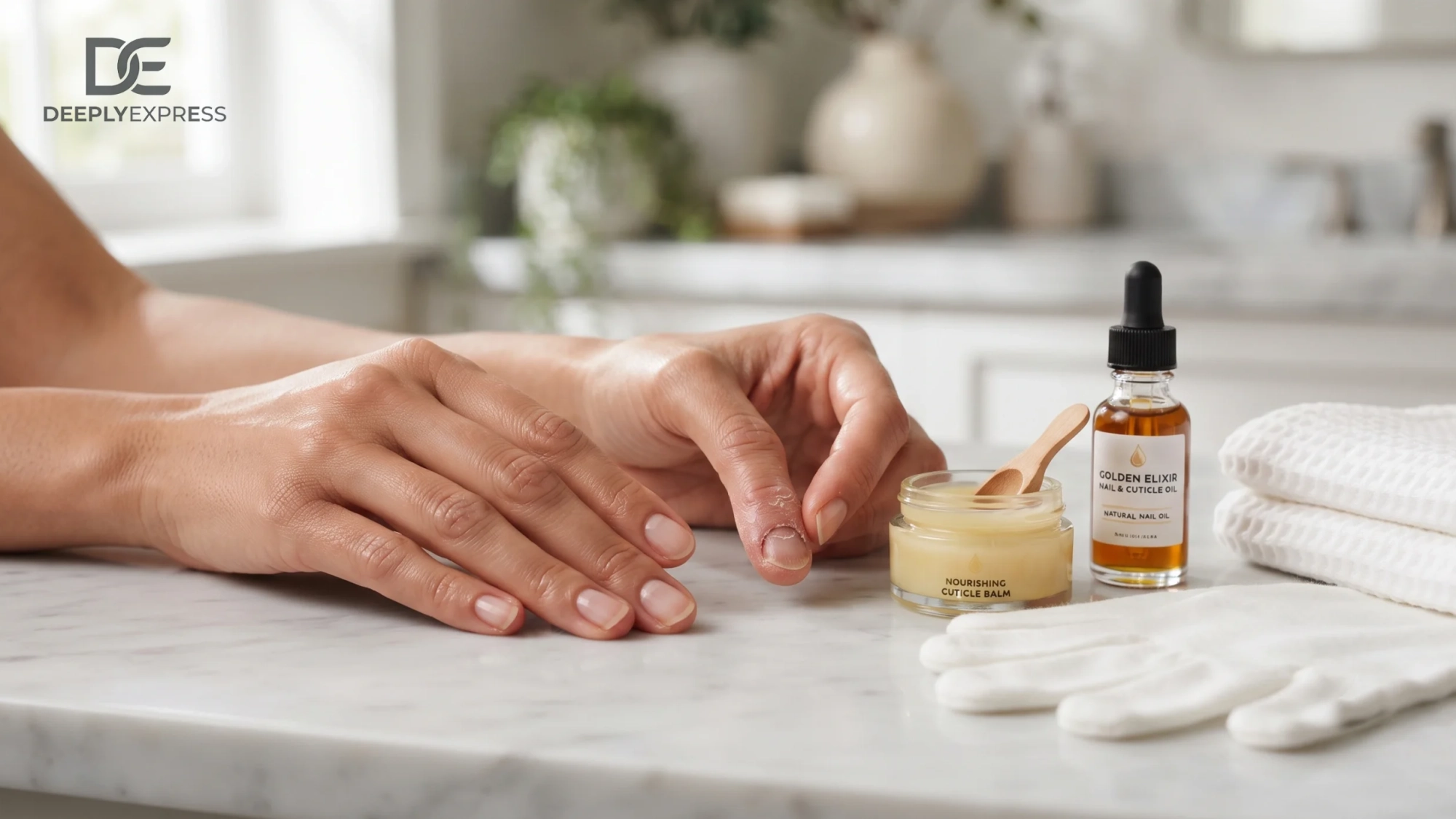
Pretty hands become marred by something that seems small but is very painful indeed. The skin directly surrounding the nails begins to dry out, crack, and peel off in rough chunks. This not only looks unsightly but also leaves you wide open to infection from bacteria, causing you immense pain and inflammation.
Sore fingers make everything you do a painful reminder of the condition. Whether typing at a computer, washing up, or putting your hands in your pockets, all activities hurt.
What makes this condition worse is that treating it involves more than simply smearing on regular moisturizer. You have to figure out what makes this particular area so sensitive to damage and treat it with biological accuracy.
THE SECRET OF DRY SKIN AROUND NAILS
In order to solve the problem with your nails, you need to know their peculiarities. The skin that surrounds your nail plate is cuticle and proximal nail fold. Cuticle is nothing but dead skin cells that cover the space between nail and living skin. The skin around the sides of the nail plate is alive and subjected to constant mechanical stresses.
Contrary to skin on the face and palms, the tips of your fingers have no sebaceous glands. Sebaceous glands produce sebum – a kind of natural oil which keeps the skin waterproofed and moisturized. As your fingertips don’t have this oil-producing mechanism, they depend completely on moisture which gets through the deeper skin layers.
As soon as your hands come into contact with irritant substances, the whole delicate balance is broken. Without sebum, there is nothing to prevent fast dehydration. This results in shrinking, hardening and separation of skin cells. Thus, the painful flaps appear.
MAIN REASONS FOR THE PROBLEM
Knowing what causes this painful condition will help you prevent it from happening. There are several things that people do and factors that exist in their environment and make your skin lose all the water it has.
FREQUENT WASHINGS WITH SOAP AND USING HAND SANITIZERS
Washing your hands is a necessary thing to do to keep healthy, but there are some harsh surfactants used in most conventional soaps. They are created to help eliminate grease and other dirt from dishes and surfaces. If used on your skin, the surfactants will remove the lipids that unite the skin cells. Fast evaporation of alcohol based hand sanitizers will remove the moisture in the process of drying.
CHANGING WEATHER CONDITIONS
Winter is known for its low humidity. Your skin will feel changes in temperatures when you get back home from outdoors where it is extremely cold. The humidity level in the air is very low and this will cause your fingers to lose the moisture even faster. Also, high temperatures in summer and constant swim in a pool with chlorine may have the same effect.
CHEMICAL EXPOSURE ACCIDENT
Many house cleaning agents, nail polish removers with acetone, and some hair care products consist of potent solvents. These chemicals when they come in contact with the skin around your nails break down the protein bonds which help to hold the skin together. It is often a matter of several minutes to cause severe peeling after unprotected dish washing.
MALNUTRITION
Skin needs certain nutrients in order to maintain its structure. Insufficiency of essential fatty acids, vitamin A, E, and C or dehydration may appear first in your hands or feet. Your body gives priority to internal organs and deprives your fingers of necessary nutrients for the cell renewal.
TWENTY FOUR HOUR FAST FIXING TREATMENT
When your skin suffers from peeling and pain, you should do everything possible in order to heal it and stop the process of peeling. This fast and intensive treatment is created to save your fingers overnight.
- STEP ONE: THE WARM WATER SOAK
To start off, soften the hard, dead skin cells so they become capable of absorbing the moisture properly. Place some warm water in a clean bowl. Do not use hot water, because the heat only breaks down the skin even more. Add a few drops of jojoba oil or sweet almond oil. Soak your fingertips in the solution for five minutes.
- STEP ONE AND A HALF: PRECISION TRIMMING
Take a close look at the peeling skin cells. In case you see any loose bits of skin that might get caught on your clothes, then you have to trim those off in order to avoid tearing yourself. Use sterile cuticle nippers. Trim only the totally dead translucent piece of skin off, never the pink one.
- STEP TWO: THE TARGET HYDRATION LAYER
With your hands still wet from soaking, it is time to introduce a humectant layer specifically designed for the job. Get your hands on a specially formulated nail oil or serum enriched with hyaluronic acid or glycerin. They work as tiny sponges attracting moisture from the air down into the skin. Rub the substance all over your nails, paying particular attention to the sides.
- STEP THREE: THE LIPID BARRIER RESTORATION
Humectants need to be sealed in to prevent evaporation. For this purpose, you should use a layer of lipids right away. Go for a balm that contains ceramides, cholesterol, or shea butter. These components mimic the natural lipids that should be contained by healthy skin.
- STEP FOUR: OVERNIGHT SLUGGING OCCLUSION
For keeping all of this moisture in while you are sleeping, slather on a thick coating of pure white petrolatum or skin protectant ointment onto your fingers. After doing so, cover your fingers in clean and comfortable cotton gloves. The gloves will not only keep the ointment from being rubbed off on to your bed sheets but will also provide warmth for pushing the moisturizing agents into the skin layers. By the time morning comes around, you will see that there is less swelling and smoother edges.
PRESERVATION METHODS FOR THE FUTURE
Halting the acute problem is one thing but to keep the state of your nails in top form, there is a need to change habits that will prevent further damage to the hands.
| DAILY PRACTICE | PROTECTIVE MEASURE |
| . Glove Rule . Cold Defense . Swap Soaps . Drink Plenty of Water | . Use rubber gloves for dish washing and heavy duty work . Wear warm gloves before going out in extreme coldness . Replace gel-based products with oils and sulfate-free soaps . Use cuticle oil every time you wash your hands |
THE PROTECTION PRINCIPLE
Avoid direct contact with cleaning agents and detergent products with your bare hands in future. Keep pairs of rubber gloves with liner in kitchen, bathroom and laundry room. It will protect the tips of your fingers from continuous wet-dry cycle which causes problems with skin protection.
WISE PRODUCTS CHOICE
Check out the list of ingredients of your everyday products. Choose a hand soap, which is more lotion-like and does not contain any sulfates in it. In case of removing nail polish choose oil-enriched and acetone-free products. They may take longer time dissolving the polish, but they will preserve your cuticles from dehydration.
MAINTENANCE OF YOUR TOOLS
Quit fiddling around with that piece of skin. There are always germs in your mouth, and these will easily enter that open wound and cause paronychia, which will be really painful for you. Have a good quality pair of nippers with you and trim the hangnails to avoid temptation of pulling it.
INGREDIENTS YOU SHOULD BE LOOKING FOR
When buying hand creams or nail oils, do not pay any attention to fancy marketing statements, but focus solely on the ingredients list. The best products contain three particular kinds of humectants.
WATER RETAINING INGREDIENTS
Glycerin, urea and hyaluronic acid should be included. Urea in particular will help when you have peeling fingertips since it has keratolytic qualities. In other words, it will dissolve the bonds between the dead skin cells without physically removing them.
EMOLLIENTS TO SMOOTH THE TEXTURE
Jojoba oil, squalane, and borage seed oil are simply amazing ingredients for nail health. It is interesting about jojoba oil that its molecular structure is similar to the structure of sebum in the human body. In other words, it penetrates into the skin around the nail better than vegetable oils.
OCCLUSIVES TO ENSURE THE BEST PROTECTION
Shea butter, beeswax, and petrolatum create a physical protective layer on the surface of the skin. They do not allow the evaporation of moisture inside the skin.
WHEN SHOULD YOU GET PROFESSIONAL HELP?
In most instances, the peeling of skin on the nail bed results from the natural process of drying up and environmental factors. In situations where the skin continues to stay red, keep bleeding or becomes covered by some yellow crusts, there are possibilities that you are suffering from an infection or another skin problem such as psoriasis. In case you experience redness spreading down the finger or the finger becoming warm, seek immediate medical help from a dermatologist.
With the help of an established regimen and protecting the hands from environmental factors, you can effectively get rid of the peeling skin forever. The key lies in commitment and consistency.
Leave A Comment