
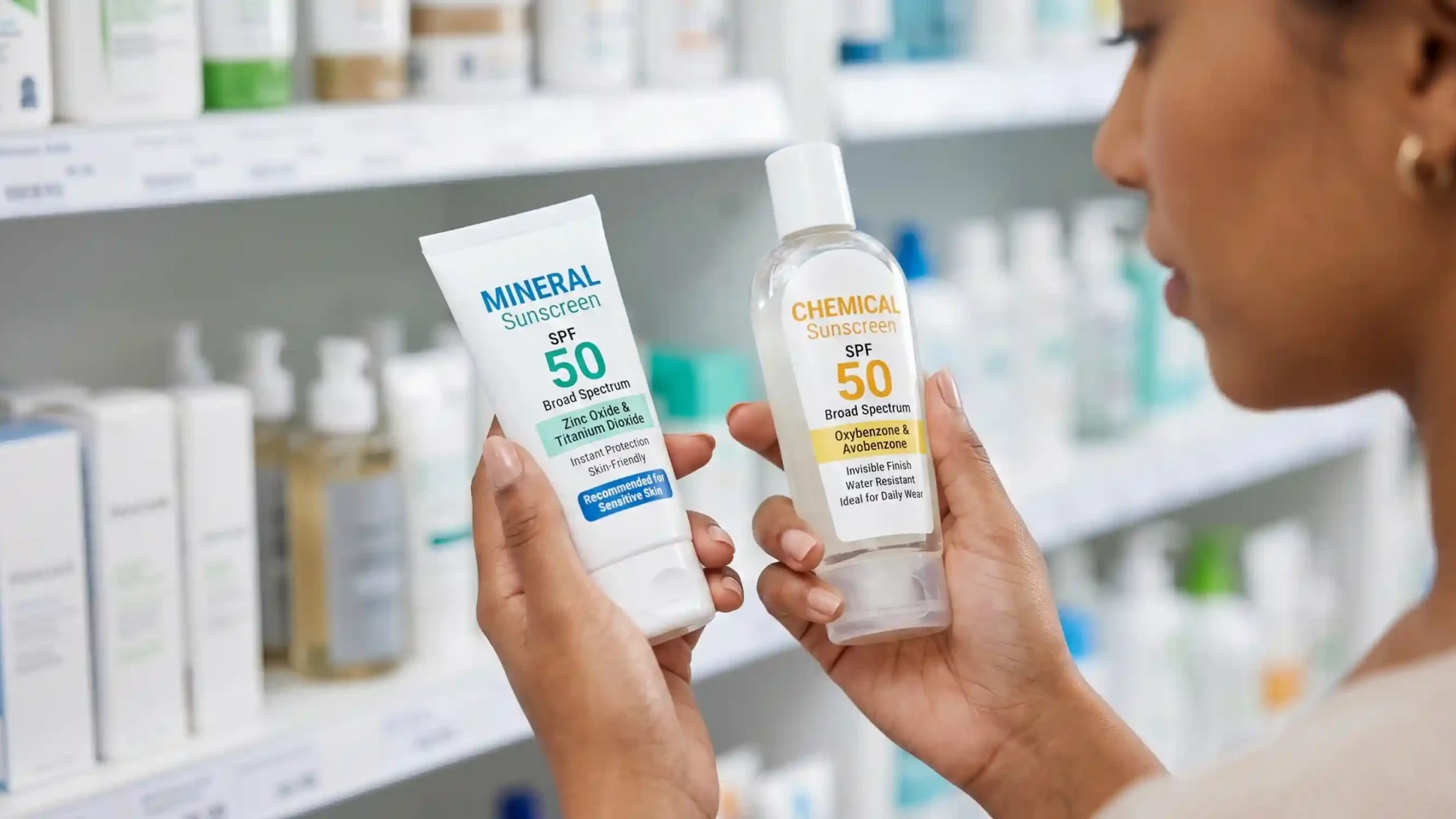
Standing in the aisle, trying to choose between two sunscreens in SPF 50—one mineral, one chemical—both claiming to protect your skin. Let’s take a deep dive into the differences, without all the complicated terms, and find out which sunscreen will become a part of your everyday life.
Why You Need Sunscreen
Basic facts: sun emits two types of UV light rays—UVA (which ages deeper down, into your layers of skin), and UVB (responsible for the surface burning). The combination of the two causes more than 80% of visible signs of skin aging.
Daily rule: apply SPF 30 or higher every day, rain or shine, year-round, with no exceptions. And broad-spectrum is your key term here—it means protection from both UVA and UVB.
Mineral Sunscreen: Definition & Functions
Active ingredients used: Zinc oxide and titanium dioxide. FDA-approved as Generally Recognized As Safe and Effective.
Mode of action: Mineral sunscreens work by creating a physical barrier on the skin that deflects UV rays off like a mirror.
Pros:
- Instantaneous coverage upon application.
- Photostability—it remains effective for longer periods.
- Skin-friendly formula with no risk of irritation, suitable for pregnancy.
Cons:
- Causes white or gray discoloration of darker skin tones.
- Has a heavy consistency and may weigh you down.
- Lower water and sweat resistance than most chemical alternatives.
Update 2026: Tinted versions of mineral sunscreen combined with iron oxides provide better coverage and help protect against blue light exposure, leading to fewer dark spots.
What Chemical Sunscreen Is and How It Works
What it contains: organic filters such as oxybenzone, avobenzone, octocrylene, and many others. Manufacturers combine multiple filters for full-spectrum protection.
How it works: chemical sunscreens absorb UV light, turn it into heat, then dissipate this energy from your skin.
Why people prefer it:
- Lightweight and invisible – no chalky finish, perfect for wearing under makeup.
- More cosmetically elegant and layered.
- Provides better water resistance for activities such as sports and swimming.
Drawbacks:
- Takes 15 to 20 minutes to reach full efficacy after being applied.
- Some filters might be irritating for sensitive and acne-prone skin.
- Skin absorption of certain filters has been shown by research; however, regulators claim that absorption alone does not prove danger and that regular application of sunscreens remains necessary.
Latest update: the FDA considers approval of new filters with a proven safety record globally that increase stability and reduce irritation.
| Feature | Mineral | Chemical |
| How it protects | Reflects UV rays | Absorbs UV rays |
| Active ingredients | Zinc oxide; titanium dioxide | Oxybenzone; avobenzone; octocrylene |
| Works immediately | Yes | No wait required ✗ Wait 15–20 mins |
| White cast | Often; improving with tints | None |
| Best for sensitive skin | Yes | Can irritate |
| Best for dark skin | Tinted mineral only | Yes |
| Water resistance | Less so | Better |
| Skin absorption | Minimal | Some absorption detected |
| Pregnancy preference | Preferred | Consult doctor |
Which One Is Suitable for You?
- Sensitive or reactive skin: Mineral—formulations without fragrance that contain zinc oxide.
- Acne-prone skin: Mineral—zinc oxide is calming and non-comedogenic.
- Darker skin types: Chemical for seamless application or tinted mineral to prevent a white cast.
- Those who wear makeup regularly: Chemical is easier to apply; tinted mineral is also a good option.
- Sports enthusiasts: Chemical tends to withstand sweat and water better than mineral.
- Pregnant women: Many dermatologists recommend mineral due to filter absorption fears.
- Hyperpigmentation: Tinted mineral with iron oxides prevents visible light from aggravating the condition.
Hybrid Formulas and Frequently Asked Questions (FAQ)
Combination formula for everyday use: practical formula tinted mineral base in the morning and clear chemical sunscreen stick for frequent touch-ups during the day. Today there are many companies which produce a hybrid formula combining mineral and chemical UV filters.
FAQ answers
Q: Mineral sunscreen better than chemical
A: No; there is no winner here. It depends on your skin condition and personal preference.
Q: Can I use chemical sunscreen daily
A: Yes; health agencies insist on using sunscreen daily since sun exposure is harmful and proven.
Q: Do I have to wait before applying mineral sunscreen
A: No; it starts working immediately.
Q: Which SPF do I need
A: At least SPF 30 every day and SPF 50+ for outside activities.
Final Thought
Whether mineral-based or chemically-based, both types will keep your skin safe if you use them right. But remember, the best kind is one that you’ll be motivated to apply each and every day—a broad-spectrum product with an SPF value of at least 30 and regular reapplication while out in the sun. Which one do you choose in the morning? Let us know below!
Would you like to know more tips to keep that Homemade Remedies? Read all about it in our post on DeeplyExpress.com 10 Homemade Remedies to Control Oily Skin Naturally.
Leave A Comment