

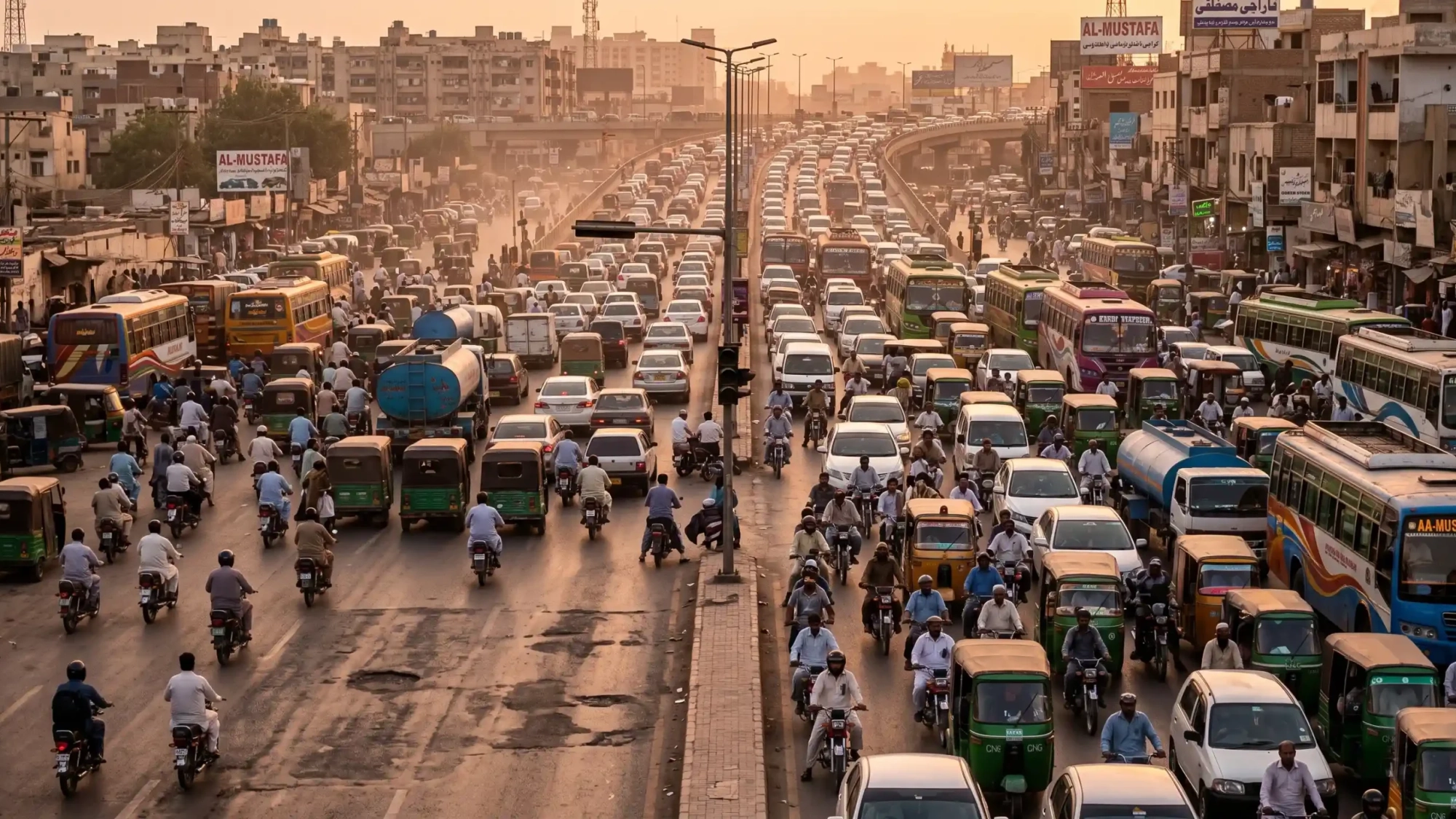
803 road deaths in Karachi alone in just one year. Traffic congestion in the world on the rise by 25 percent. Workers in some cities wasting more than a week’s time every year stuck in traffic. Traffic isn’t just an irritation—it’s the closest reflection we have of society.
By DeeplyExpress Lifestyle Desk · Urban Life & Society
Remember the last time you were stuck in a traffic jam that wasn’t necessary, not because of any accidents or road construction, but simply because of a thousand little choices made by a thousand people refusing to allow any other cars to merge, running the light, squeezing into a lane that’s closing? Remember how you felt then: frustrated, powerless, and even contemptuous of all those around you? You weren’t alone. Research into the connection between driving behavior and civic culture suggests that how a city drives is one of the least mediated ways of understanding how it actually functions; what it believes in, fears, and how much it honors the man next to it. In 2026, the release of the 2026 TomTom Traffic Index demonstrates just how clear a message our roads have been giving us.
Can Traffic Discipline Be an Indicator of a Nation’s Success?
This seems to be quite an outlandish proposition. However, studies carried out and published in the journal entitled Journal of Road Safety suggest the very point that all observers of city streets intuitively understand: driving behavior is heavily influenced by three major factors — institutional capacity, economic development, and cultural norms collectively held within a particular society. Stated differently: how one drives reflects their attitudes toward institutions, the degree to which society is unequal and stratified, and whether the social contract is honored. In societies marked by well-developed institutions, efficient enforcement mechanisms, and high trust in institutions, people stop at the red light even in the absence of a policeman, not due to the threat of punishment but because they understand the sense of the rule. When institutions are weak, enforcement inefficient, and the social contract is violated — when elites freely violate all established rules and an ordinary citizen feels that obeying rules puts them at a disadvantage — streets become battlefields. All traffic lights turn into suggestions.
“When motorist offenders fail to take into account the severity of their actions against the law and become defiant towards traffic agencies, it undermines the power of the enforcement officials involved, and it signifies larger problems in society such as poor civic sense.”
— International Journal of Research and Innovation in Social Science, December 2025
As one editorial writer succinctly observed, “When traffic rules are constantly adhered to by any given society, there is a very clear message sent across about rules, regulations, and responsibility. When however people using roads do not adhere to traffic regulations with impunity, it results in a culture of indiscipline that spills into our homes, schools, work places, and communities.”
Five Cities Where Traffic Has Turned Into a Crisis
Below, according to the 15th edition of the TomTom Traffic Index, which is based on 2.2 trillion miles worth of data gathered throughout the world for driving during 2025 and verified against data from the INRIX Global Traffic Scorecard, are the five cities where traffic is truly a crisis.
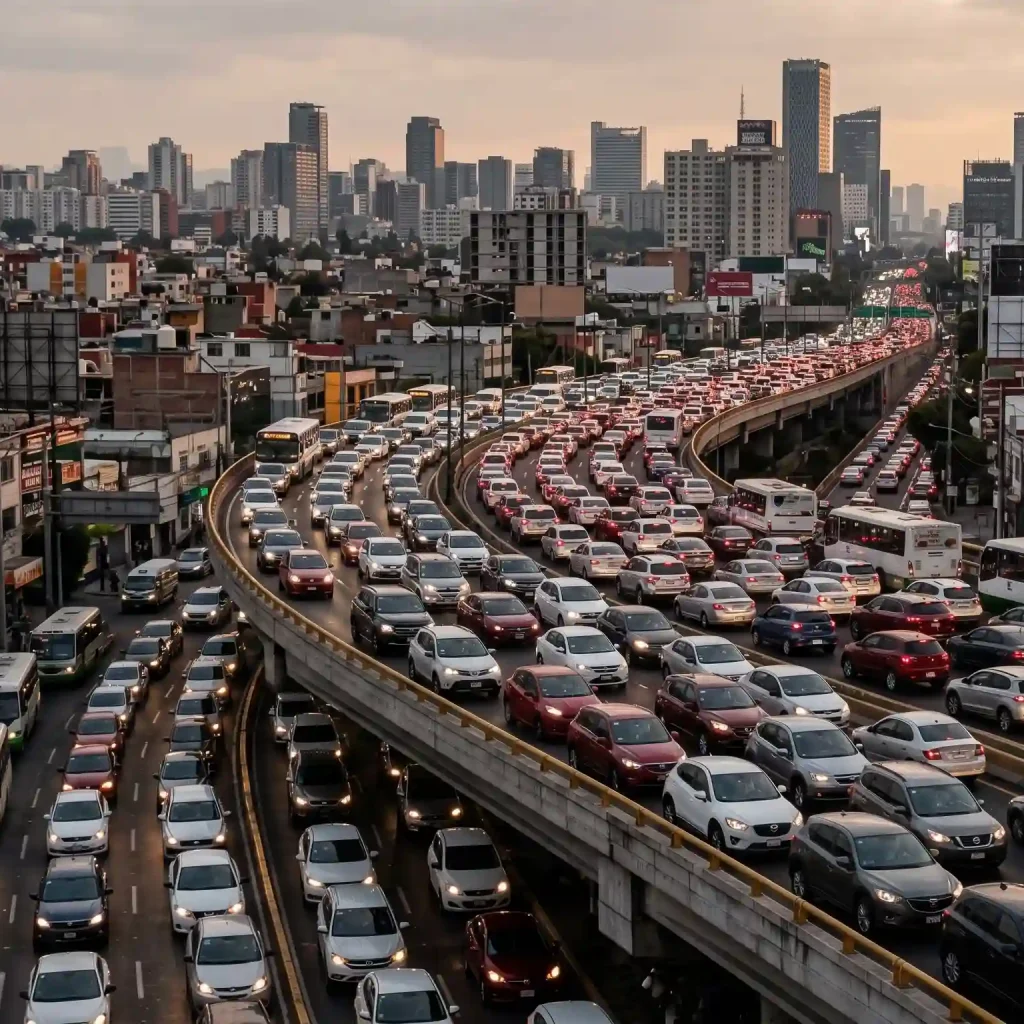
1. MEXICO CITY – MOST CONGESTED CITY WORLDWIDE
52% Congestion · 6 Days, 8 Hrs Lost/Year
According to TomTom, Mexico City is the most congested city worldwide as of 2025. It is plagued by more than 21 million inhabitants, limited metro rail system capacity, and car ownership culture. Inrix listed it as the second most congested city worldwide in 2025, after Istanbul.
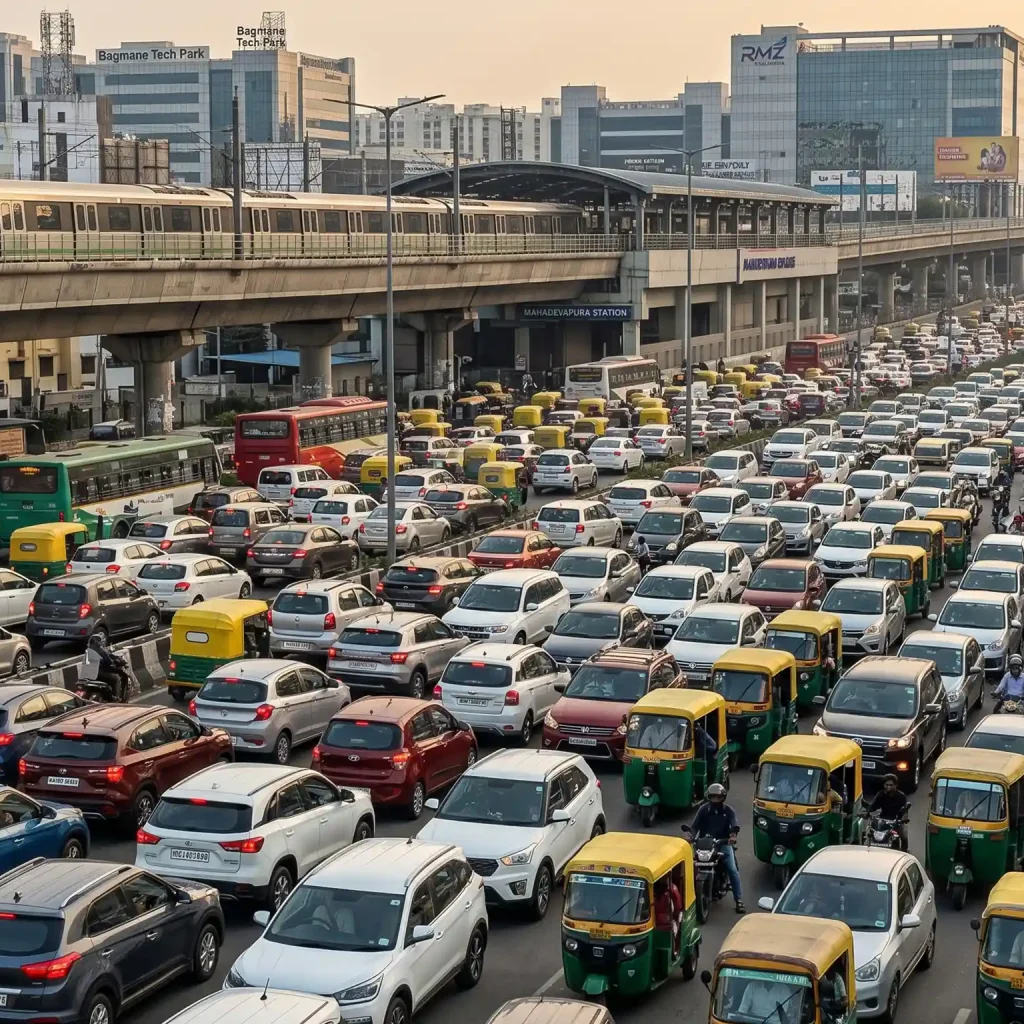
2. BANGALORE – MOST CROWDED TECH HUB OF ASIA
9,500 vehicles per kilometer
With the largest vehicle density in the country, Bangalore is one of the most crowded cities in India. As reported by the Times of India, drivers tend to violate fundamental driving laws, blocking intersections and causing congestion throughout the entire city. In 2025, the city imposed penalties on drivers to address the structural problem of road congestion.
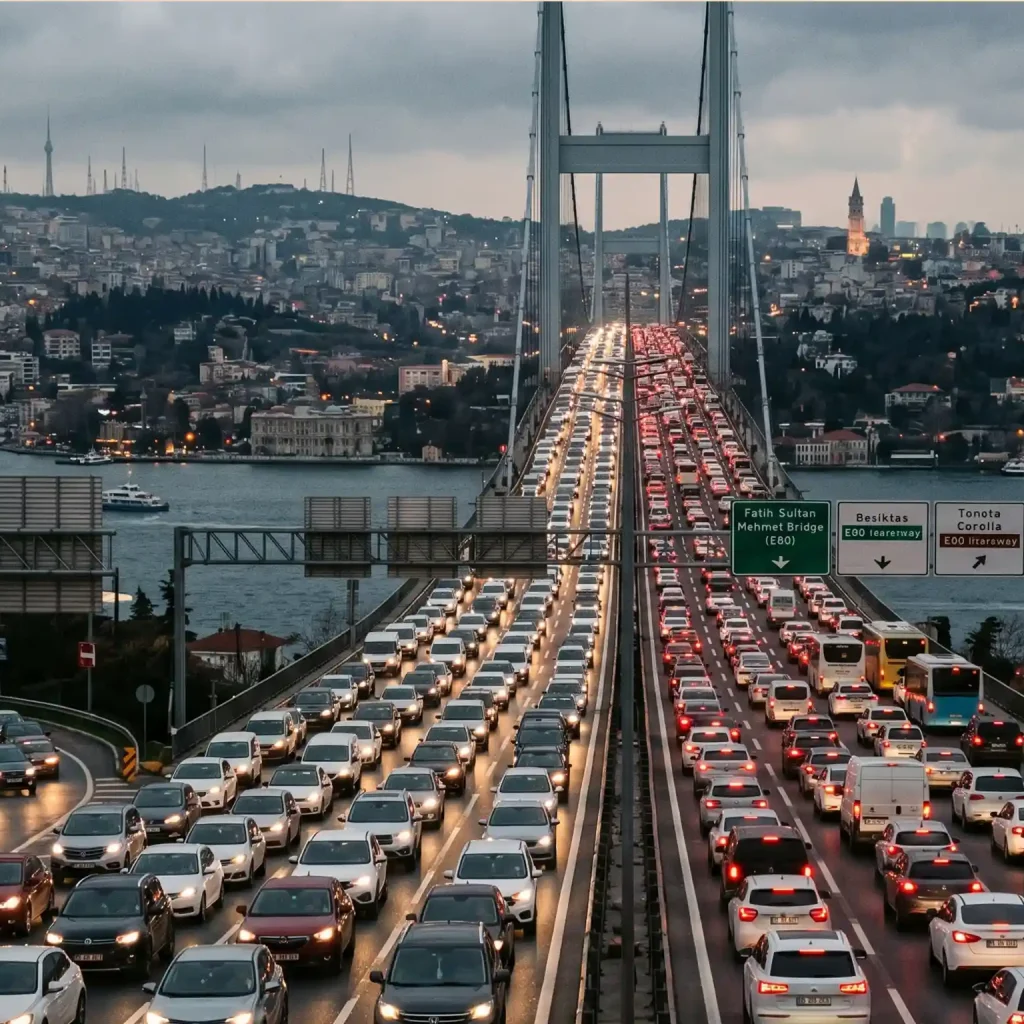
3. TURKEY, ISTANBUL – #1 IN THE WORLD ACCORDING TO INRIX
Worst city ever according to INRIX
According to INRIX’s 2025 Global Traffic Scorecard, Istanbul topped the list as the city where its citizens lose the most time from traffic. Located between Europe and Asia with several bridges linking the two continents, Istanbul is extremely susceptible when it comes to congested roads.
4. BARRANQUILLA, COLOMBIA – SLOWEST DISTANCE TRAVELED PER HOUR
3 min 40 sec/km (62.2% congestion)
According to TomTom’s index in 2025, Barranquilla has topped the charts when it comes to the slowest distance traveled per hour, where it takes nearly four minutes to cover a single kilometer. Colombia stood first worldwide in terms of percentage of congestion.
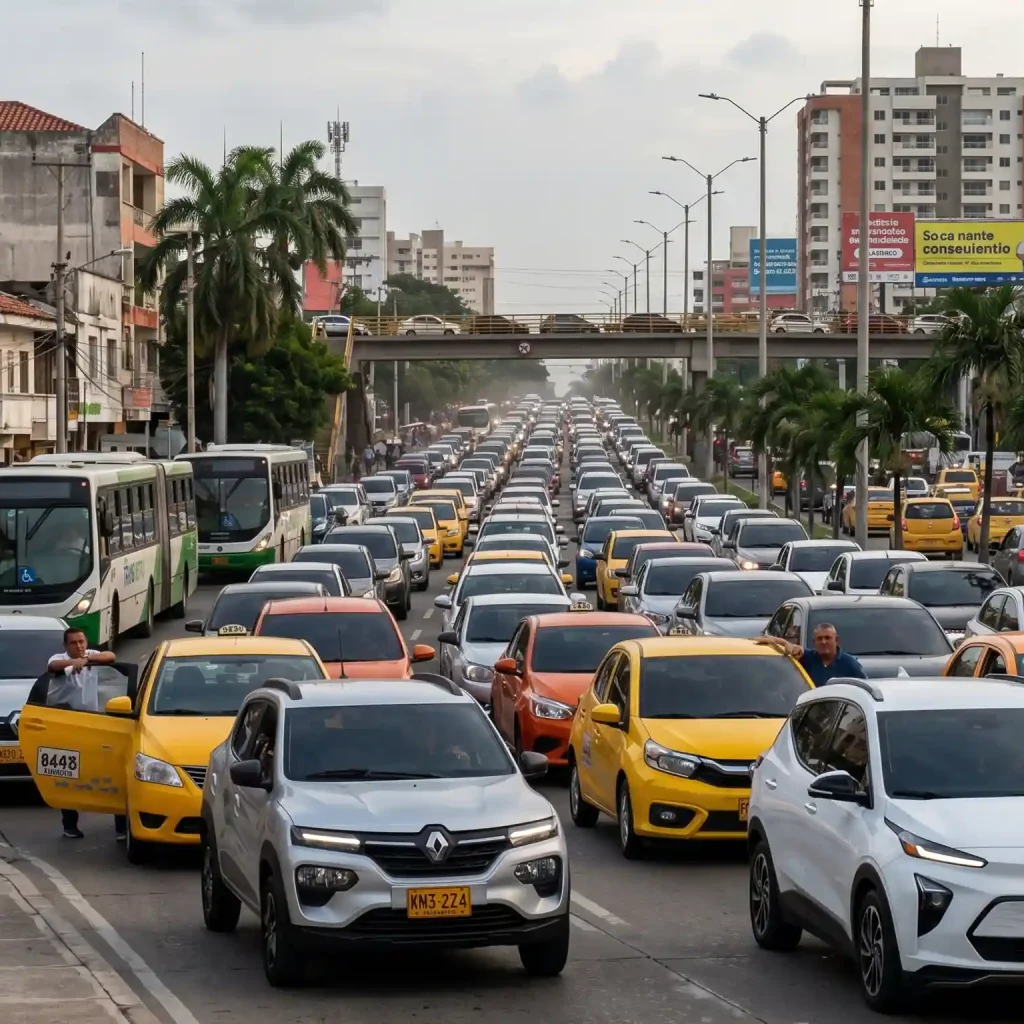
5. KARACHI, PAKISTAN – SOUTH ASIA’S MOST DEADLY URBAN ROADS
803 road fatalities in 2025
Karachi is not among TomTom’s top-20 for sheer volume, but in terms of the price that human beings pay, Karachi ranks among the deadliest cities in the world. More than 800 people died from traffic accidents on its streets in just one year. Reckless drivers, deteriorated infrastructure, jumping red lights, riding motorcycles against the flow of traffic, and no patience whatsoever make up a lethal cocktail.
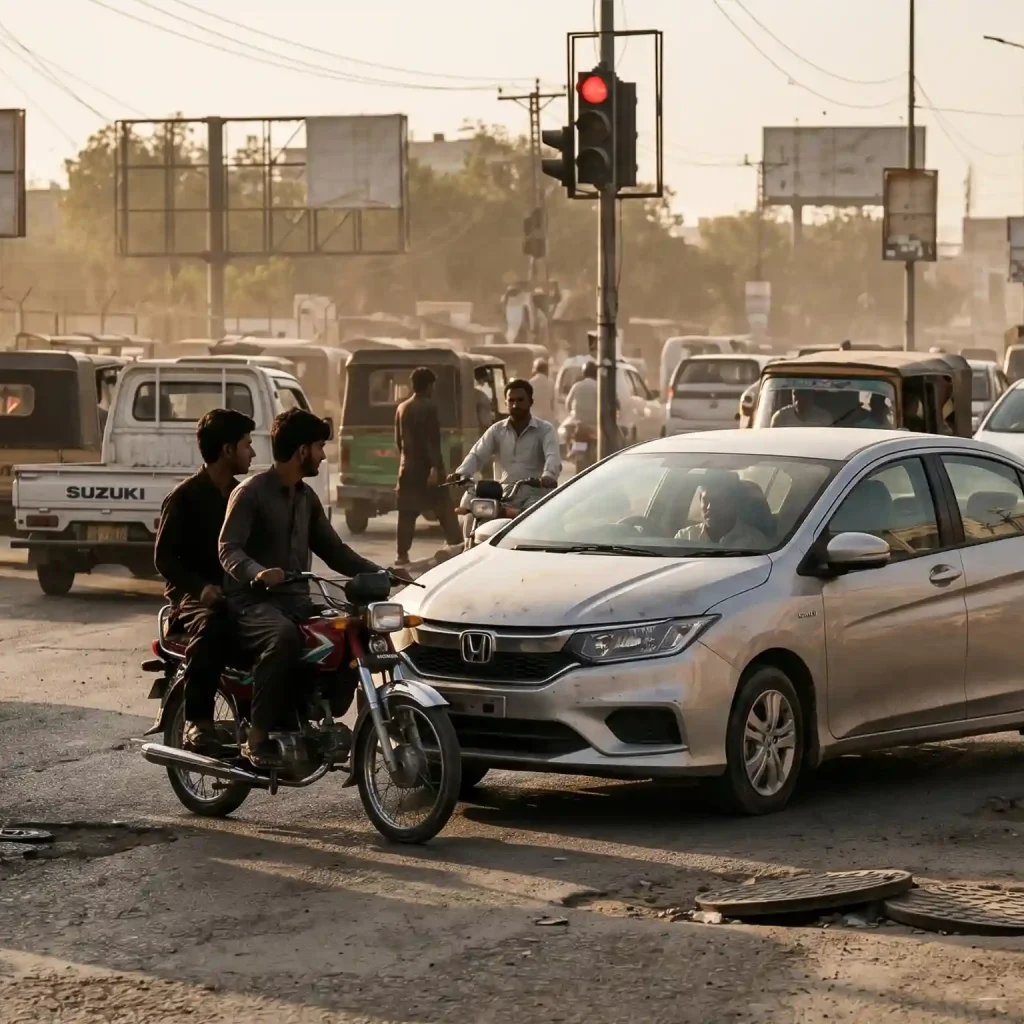
Statistics about Karachi (2025-2026)
Fatal road accidents: 803 cases in 2025. 27 people died due to falling into open manholes. A rise of 15 percent in motorcycle accidents was witnessed during the same year. N-25 Highway (Karachi–Chaman) saw 35,113 cases of road accidents in five years with fatalities being 900. In the first half of 2025, MERC of Pakistan saw 12,110 road accidents, which caused.
The violations that make up the violations on the roads in Karachi are very purposeful. Drivers jump red lights because they know that they may not get caught or that, even if they do, they will only have to pay a fine which can easily be argued. Motorists drive on the road because no one has ever caught them before. Wrong way driving continues because motorists realize that they must keep their eye out for opportunities or they won’t make it. Individually, the rule breaking seems logical, but collectively, it means that 803 people died last year – and the daily commute goes on unaltered.
Beginning in 2026, the Karachi Traffic Police began enforcing wrong way drivers more heavily through use of cameras, digital challan and patrol units. In conjunction with the Karachi Road Accident Analysis Team, these actions brought about a 31.7 percent decrease in the number of deaths caused by accidents during the second part of 2025. This was indeed an improvement. However, it was also a reminder that 477 people had already died earlier in the year.
Whose Responsibility Is It, Really – Government or Citizens?
It is the truthful response, based on research evidence, that it is both in varying degrees but not at the same time; it is a process, not a conflict.
THE GOVERNMENT’S RESPONSIBILITIES
- Ensuring that roads are in safe and operational condition
- Providing functional traffic signals
- Unbiased and rigorous enforcement of traffic laws
- Developing public transport systems as an alternative means of traveling
- Road design that does not allow wrong way driving
- Fines that transparently go into road repairs
- Effective driver licensing process
THE CITIZENS’ RESPONSIBILITY
- Observing signals regardless of whether policemen are around
- Adhering to lane discipline and merge procedures
- Not running into oncoming lanes even though one can save 3 minutes
- Not using motorcycles on pedestrian pathways
- Avoiding bribery of traffic policemen to evade traffic fines
- Setting a good example to children traveling in their vehicles
- Reporting road damages and obstructions
As stated by the Journal of Road Safety, it can be seen clearly that good governance and societal culture influence the behavior of drivers; however, good governance is important before society’s cultural values. If there is consistency in the way law enforcement is practiced and no one is above the laws, even the Minister’s car has to pay the traffic fines like the motorcyclist, and then society’s culture will automatically become good. But if enforcement of law is selective and corrupt, society learns that only the weak have to obey the laws.
“Equal enforcement of traffic regulations to everyone, be it to the everyday motorcyclist or to the rich SUV owners, makes people think that no one is above the law.”
—Urban governance analysis, 2025
Things that Work: Lessons from Cities That Got Their Acts Together
But not all hope is lost. Some cities have shown that change can happen, not through one magic cure but through steady, multi-dimensional effort across many years.
1. TECHNOLOGICAL ENFORCEMENT: The reforms planned for Pakistani motorways by 2026 are proof of what technology can do. Smart speed cameras, e-challans, and digital monitoring ensure no corruption in the system. In NYC, the introduction of the congestion pricing mechanism led to tangible results in 2025. Cameras don’t take bribes.
2. INVESTMENT IN PUBLIC TRANSPORT: Cities that have managed to wean themselves off cars have done so because they have offered their residents a realistic alternative to driving – whether by investing in mass transit projects like Bogota’s TransMilenio, Istanbul’s new subway lines, or Singapore’s MRT. Mexico City’s new buses are beginning to bear fruit.
3. REPAIR OF ROAD INFRASTRUCTURE: In Karachi, the pothole that killed the woman on Rashid Minhas Road was not an act of nature. It was poor governance. Fixing roads leads to fewer accidents, better traffic flow, and gives a message that the city cares about its citizens.
4. PRIMARY EDUCATION: In the countries that have highly disciplined traffic societies such as Germany, Japan, and Singapore, road safety awareness has been built into the school curricula right from primary level. Citizens who grow up learning the reasons behind traffic laws tend to abide by them out of respect.
5. CONSISTENT ENFORCEMENT: In rural Kashmir in 2025, road accident deaths dropped by 27.6% due to “consistent intervention.” It was not high-tech – consistent enforcement was the key. When everyone gets equal treatment under the law, compliance comes easily.
The Philippines’ Lesson
In Metro Manila, the average commuter wasted 143 hours — almost six whole days — on the roads in 2025, up from an hour in the previous year. The rehabilitation project along EDSA, which is the main artery in Manila, was put off once more by the MMDA. However, in Davao City in the same country, the average commuter wasted 168 hours, placing the city at number 12 on the list of the most congested cities globally.
A Larger Question: What Are Our Roads Telling Us?
There is a reason why tourists visiting certain cities quickly feel safe on their roads and insecure and threatened on others. It is not just about the quality of the infrastructure, but about the social contract that such infrastructure facilitates or undermines. The roads where signals work, the markings are clear, the lanes in good condition, and the traffic law consistently enforced indicate that our society has organized itself in ways that ensure mutual benefits, and expects you to uphold them too. A road where signals are non-functional, marking have been painted over, vehicles drive on footpaths, and motorcycles run against the direction indicate: here, it’s every man for himself.
Karachi is far from the only one making this mistake. Istanbul, Mexico City, Bengaluru, and scores of other cities face the same challenge, albeit in varying capacities. Global traffic congestion has risen by 5 percentage points to reach 25%, up from 20% earlier. In other words, global roads are becoming increasingly congested – and thus dangerous – rather than the other way around. The challenge will be whether it can be halted before things get out of hand.
THE HONEST REVIEW
The traffic problem goes beyond technical issues; it is more of a civic problem that tests whether the system of governance in a state is working well and whether the citizens can show courtesy even to those they do not know. This is either both happening together or failing at the same time.
In Karachi, by the year 2026, the process has been started and the statistics are indeed showing positive results. However, the number of fatalities in the year 2025 is reported to be 803, and the infrastructure and the culture of impunities still exist. Improvements have been made, yet there is still much to be done.
True changes will not come through technology, but rather in a long-term way and through the social transformation that would make it easier for all citizens to follow the rules not out of fear, but rather out of respect for other people on the road.
Sources & References
Bored Panda — Cities with the Worst Traffic in the World (TomTom) (January 2026)
TomTom — TomTom Traffic Index 2025 — 15th Edition Global Results (January 21, 2026)
TomTom Newsroom — Traffic Index 2026 Headline Numbers: Global Congestion Worsens
Dawn — Karachi’s Deadly Roads and the Limits of Enforcement (January 2, 2026)
MarkSafe — Pakistan Road Safety Statistics 2026 (March 2026)
The Tribune India — Pakistan: Karachi’s residents battle poor road infrastructure (January 2026)
Journal of Road Safety — Role of Culture, Income Level and Governance Quality on Driver Behaviours (2024)
IJRISS — Challenges Encountered by Traffic Enforcers (December 2025)
MEXC / Philippine data — Filipinos lost more hours in Metro Manila, Davao City traffic in 2025 (January 2026)
Modern Ghana — Discipline on our highways does influence community values (June 2025)
Leave A Comment