
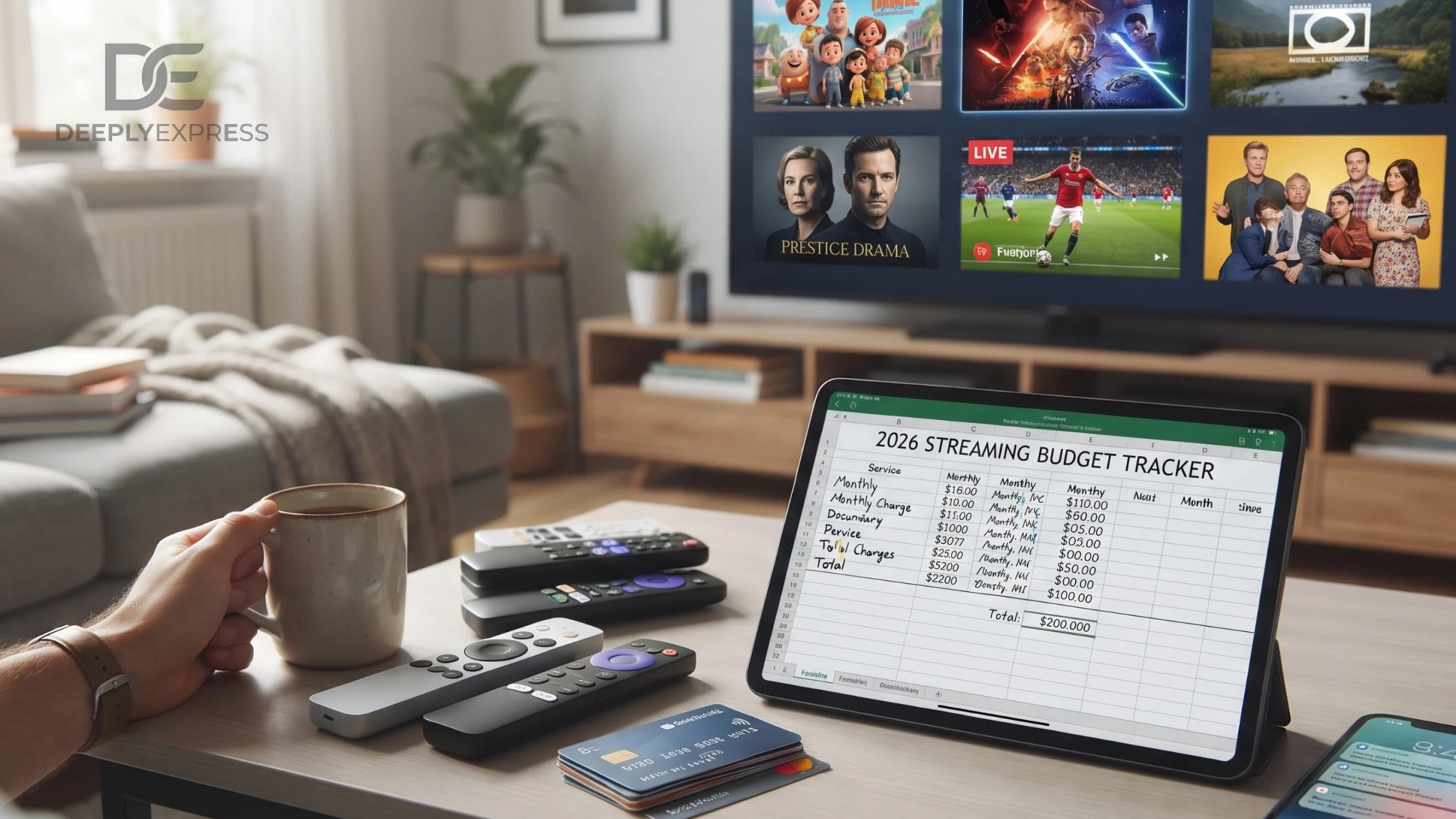
The whole idea of streaming not too long ago was that it would replace the bloated cable bill. One low-cost subscription, all the content you wanted, no contract. That was the pledge. In 2026, the average American household spends over $60 per month on streaming subscriptions, a figure that, according to a Reviews.org survey, approached $278 per month when phone, internet, and bundled services were included. The streaming bill has become the new cable bill, but now spread across six different apps with six separate logins, six renewal dates, and six companies sending you notifications about content you will never watch.
They are different platforms. Some deliver consistent value every month. Others are worth subscribing to for two months, watching what you came for, and cancelling until the next thing you want arrives. And the most useful thing this guide can give you is to know which is which.
THE STATE OF STREAMING IN 2026: HIGHER COSTS AND GREATER FRAGMENTATION
Between 2024 and 2026, the streaming landscape changed dramatically. Netflix globally rolled out its password-sharing crackdown, turning tens of millions of account-borrowing households into paying subscribers. Throughout 2026, Disney will be merging Hulu into the Disney+ app, resulting in one place to find content from Disney Animation, Pixar, Marvel, Star Wars, FX, and Hulu originals. Max (formerly HBO Max) is in the midst of an $81 billion merger with Paramount+ that the DOJ cleared on June 12, 2026, with an expected close in Q3 2026 that will bring Game of Thrones, Yellowstone, The Sopranos, Star Trek, Survivor, and the full Showtime library under one roof.
The Turner Sports era came to an end when the NBA signed an 11-year, $76 billion rights deal with Amazon Prime Video, NBCUniversal and ESPN/ABC. UFC will go exclusively to Paramount+ in 2026. These sports rights moves matter because they force certain subscriptions on viewers who want to follow certain leagues, regardless of what else those platforms offer.
And now bundling is really the smartest financial move. The combined price of Disney+, Hulu and Max is about $29 a month with ads. The bundle drops that to $16.99 a month. Verizon customers will get a Netflix and Max bundle for $13 a month. Xfinity customers can get Netflix, Peacock and Apple TV+ for $18 a month with the StreamSaver bundle. Any of those carrier relationships that apply to you change the math pretty significantly.
NETFLIX: THE SAFEST SINGLE SUBSCRIPTION STILL
Netflix has 325 million paid subscribers globally in Q1 2026. That scale is important because it means the platform can outspend any competitor on content and still be able to make a profit. The content budget for 2026 is approaching $20 billion, up from $17 to $18 billion in 2025. At that spending level, the volume of genuinely good content being released every month is higher than any one person can realistically watch.
Pricing in 2026: Standard with Ads $7.99/month (1080p, some downloads, ad breaks every 15-20 minutes) Standard $17.99/month (1080p, ad free, 2 streams at once) Premium $24.99/month (4K HDR, ad free, 4 streams at once, spatial audio)
For most households, the honest recommendation is the Standard with Ads tier. The ad load is four to five minutes an hour, less than broadcast TV. For heavy viewers, who watch two or more hours per day, the jump to Standard or Premium starts to make financial sense. The ad tier allows lighter viewers to pay less than half the price for the entire library.
Netflix is also going more aggressively than any other platform into live content. During the first quarter of 2026, the platform featured more than 70 live events, including sports, concerts, and cultural broadcasts. In Japan, the World Baseball Classic had 31.4 million viewers through Netflix. BTS Comeback Live had a global viewership of 18.4 million. Live content is beginning to be a meaningful differentiator.
On the Stranger Things comparison, one thing: Netflix bought Warner Bros. for $82.7 billion in late 2025, which would have brought the entire HBO library to the platform. Netflix backed out of the deal in February 2026. HBO library won’t come to Netflix.
Best for: Anyone who wants one subscription that covers all genres without having to think too much about what to watch. It has something for families, couples, and single viewers to enjoy. It’s also the most sophisticated recommendation engine of any platform when it comes to surfacing content that actually matches your viewing history.
DISNEY+: THE BEST CHOICE FOR FAMILIES AND A CHANGING PLATFORM
Disney is in the midst of the most significant structural change of any platform in 2026. The stand-alone Hulu app is going away, and one single destination will be created for all things Disney has ever made as well as Hulu’s general entertainment library, FX shows, and live network television. Hulu’s live TV offering is also coming to Disney+.
Pricing in 2026: Disney+ Basic (with ads): $9.99/month Disney+ Premium (ad-free): $15.99/month Disney+ and Hulu bundle: $12.99/month (ad-supported) Disney+, Hulu, and Max bundle: $16.99/month (ad-supported)
Disney+ is a value in the bundle pricing. The $12.99 Disney+ and Hulu bundle offers two services’ worth of content for about what Netflix Standard with Ads costs without the extras. At that price, it’s hard to argue with the bundle for households with kids who watch Disney and Pixar as well as adults who want access to FX shows and Hulu originals.
4K streaming and unlimited downloads are included as standard across Disney+’s paid plans, so no additional tier is required, which is a point in its favor over Netflix’s tiered 4K access.
This is likely a permanent subscription for families with kids who are into Marvel and Star Wars, not a rotating one. Movies such as Toy Story 5 and upcoming Marvel movies are headed to Disney+ and are exactly the kind of content this demographic wants on demand. For households without children or without interest in that content universe, the value case is weaker, and the bundle is still the smarter entry point.
MAX (HBO MAX): THE PRESTIGE DRAMA CHAMPION FACING A MAJOR SHIFT
Max has the best reputation in the business for prestige drama television. Max’s HBO has delivered more critical acclaim in programming than any network in the history of television. This library includes The White Lotus, The Last of Us, Succession, Game of Thrones, The Sopranos, and Euphoria.
Pricing in 2026: Max with Ads: $9.99 per month Max Standard: $16.99 per month Max Ultimate (4K, ad-free, 4 streams): $20.99 per month
Here’s the important context for anyone making a subscription decision right now: Max is merging with Paramount+. DOJ OKs Warner Bros. Sale To Skydance Paramount Discovery June 12, 2026, no conditions. A close is expected in Q3 2026, at which point the two platforms will be merged into a single service with HBO originals, Warner Bros. movies, DC properties, Yellowstone, Game of Thrones, Star Trek, Survivor, CBS programming, and the full Showtime library.
What this means practically is that if you subscribe to Max alone right now, you will likely see a rebranding and a restructured pricing plan before the middle of 2027. Paramount chief David Ellison has confirmed that HBO will continue as a sub-brand under the larger combined service. If you buy Max and Paramount+ individually today, you will pay one bill for the two libraries, and that is the only clear positive consumer result from the merger. If premium drama is what you want, and you’re not a subscriber already, it’s financially prudent to wait until the combined service launches with its inevitable promotional pricing.
For anyone looking to stay on top of the limited series that are making cultural conversation right now, the best limited series streaming in 2026 guide covers the titles worth prioritizing across all platforms.
APPLE TV+: THE BEST VALUE PER SHOW YOU’LL ACTUALLY FINISH
The most surprising one is Apple TV+. The library is really small. Netflix produces hundreds of original titles a year; Apple produces about 50-60. But the hit rate of what it does generate is remarkably good.
Pricing in 2026: Apple TV+: $12.99/month (no ads, 6 simultaneous devices, after $9.99 price increase late 2025)
Severance and Silo and The Morning Show and Ted Lasso and Slow Horses and Shrinking and Killers of the Flower Moon all generated real critical and audience reaction. Apple TV+ has consistently produced the highest ratio of award nominations to total content of any major platform, which is an indirect measure of quality consistency.
The honest use case is: subscribe for two or three months to work through the titles you’re interested in, cancel, and return when the next big season drops. It’s not something you will use for your day-to-day browsing like Netflix. It rewards a different kind of watching: Commit to one show, watch it all, and then take a break.
Something to chew on: Binge Severance over two months at $12.99/month and you’re paying about $26 for a full season of prestige TV. That compares favorably to a cinema ticket for a single film.
If you have purchased an Apple device recently, check your Apple account before subscribing. A complimentary Apple TV+ subscription period is included with most new Apple purchases, and many subscribers forget to claim it.
AMAZON PRIME VIDEO: THE MOST OVERLOOKED STREAMING DEAL
Amazon Prime Video is the streaming service that most people already have and systematically underutilise. For the 200 million-plus households that subscribe to Amazon Prime primarily for shipping benefits, Prime Video is an included addition at effectively no incremental cost.
Pricing in 2026: Amazon Prime (includes Prime Video): $14.99 per month or $139 per year. Ad-free upgrade: $2.99 per month additional. Prime Video Ultra (launched April 10, 2026): $4.99 per month or $45.99 per year additional, providing 4K/UHD streaming, 5 simultaneous streams, and 100 downloads
Prime Video has produced genuine prestige content: The Boys, Rings of Power, Reacher, Fallout, and Fleabag all live here. The NBA deal also matters. Under the new 11-year rights arrangement, Amazon Prime Video carries NBA national games, making it the mandatory subscription for committed basketball viewers who cannot watch through their local cable provider.
The caveat is the user experience. Prime Video’s interface mixes included Prime content with rented or purchased films and pay-to-add channel subscriptions in a way that takes some navigation to learn. The service has improved but still requires more attention to the “included with Prime” label than Netflix’s cleaner library presentation. Once you build familiarity with the filtering, the value is clear.
PEACOCK AND PARAMOUNT+: WORTH ROTATING, NOT KEEPING
Both Peacock and Paramount+ are honest value propositions for specific audiences, but neither justifies a permanent subscription for the general viewer.
Peacock pricing: Select: $7.99 per month; Premium with Ads: $10.99 per month; Premium Plus (ad-free): $16.99 per month
Peacock carries Premier League football, NFL Sunday Night Football, WWE, NBC programming, and a strong library of classic television. For sports viewers who follow any of those leagues, it is a necessary subscription during the relevant season. For everyone else, it is worth the two months needed to watch The Office or a particular season of an NBC show, then cancelled.
Paramount+ pricing: Essential: $8.99 per month; Paramount+ with Showtime: $13.99 per month
Paramount+ holds Champions League football, CBS programming, Star Trek, Yellowstone, and, from 2026, UFC on an exclusive basis. The addition of UFC rights makes it genuinely valuable for martial arts fans. For everyone else, the same rotation strategy applies: subscribe for the specific show or sports season you came for, then drop it.
The pending merger with Max changes the calculus significantly. Once the combined service launches, both of these libraries will sit under one subscription. The merger is expected to complete by Q3 2026. If you are considering subscribing to either right now, waiting for the combined service launch and its expected promotional pricing makes practical sense.
If the question of what to actually watch across all these platforms interests you, the best shows to watch right now in 2026 covers the titles across every major platform that are genuinely worth your time.
THE STREAMING STRATEGY THAT SAVES REAL MONEY
The honest framework for 2026 streaming decisions:
Pick one permanent subscription from the top tier. Netflix is the safest choice for the widest range of viewers. Disney+ with the Hulu bundle is the right call for families. Max is the right permanent choice for drama enthusiasts, though the merger timeline is worth tracking.
Take advantage of bundles before paying individual prices. The Disney+, Hulu, and Max bundle at $16.99 per month with ads delivers three services’ worth of content for less than most single premium plans. Carrier bundles through Verizon and Xfinity offer similar savings. If you already pay for either service, checking bundle availability before your next renewal could reduce the bill immediately.
Rotate the remaining services around what you actually want to watch. Subscribe to Apple TV+ for Severance season three. Subscribe to Paramount+ for the Champions League or a Showtime season. Watch what you came for, then cancel. Every major platform makes cancellation straightforward, and most offer promotional pricing to returning subscribers.
Resist subscribing to more than four services simultaneously. At four services with ads, a household can reasonably expect to pay $40 to $55 per month for access to more content than any person could consume in a year. Beyond four, the subscription costs begin approaching what the original cable bill looked like.
The shift in how younger audiences relate to streaming is also worth noting. Research covered in the Gen Z entertainment trends and series versus movies debate shows that younger viewers tend to binge a platform deeply for specific shows and then disengage, which actually supports the rotation strategy rather than the permanent multi-subscription model.
FREQUENTLY ASKED QUESTIONS
- WHICH STREAMING PLATFORM HAS THE MOST SUBSCRIBERS IN 2026?
Netflix leads by a substantial margin with 325 million paid subscribers worldwide as of Q1 2026. Disney+ and Hulu combined reach an additional 150 million or more through their various tier arrangements. Amazon Prime Video reaches over 200 million Prime households globally, though not all of those subscribers use the video service regularly. - IS THE DISNEY+, HULU, AND MAX BUNDLE WORTH IT IN 2026?
For most households, yes. At $16.99 per month with ads, it covers Disney and Pixar content, Marvel and Star Wars, Hulu originals and network shows, and HBO prestige dramas in one subscription. That is three platforms’ worth of content for less than the cost of Netflix Premium alone. The bundle is the best single monthly value currently available for households that watch across those genres. - WHAT IS HAPPENING WITH THE HBO MAX AND PARAMOUNT+ MERGER?
The DOJ cleared the Paramount Skydance acquisition of Warner Bros. Discovery on June 12, 2026. A merger close is expected in Q3 2026, after which Max and Paramount+ will combine into a single platform carrying HBO originals, Warner Bros. films, Yellowstone, Game of Thrones, Star Trek, Survivor, CBS programming, and the full Showtime library. Both apps remain separate until the close date. Existing subscribers to both services will eventually pay one combined bill. - IS APPLE TV+ WORTH SUBSCRIBING TO IN 2026?
Yes, but not as a permanent monthly subscription for most viewers. The library is small, but the quality is unusually consistent. The better approach is to subscribe for two to three months when a title you want to watch is available, work through the shows of interest, and then cancel until the next major release. At $12.99 per month for ad-free viewing on 6 devices, the per-show cost is very competitive with theatre tickets and rental prices.
- HOW MUCH SHOULD A HOUSEHOLD REALISTICALLY SPEND ON STREAMING IN 2026?
Between $40 and $60 per month is the reasonable range for a household that maintains one permanent subscription plus one or two rotating platforms. One permanent subscription (Netflix Standard with Ads at $7.99 or the Disney+, Hulu, Max bundle at $16.99) plus one or two rotating subscriptions kept for two to three months at a time keeps the annual bill well below what most households previously paid for cable. If carrier bundle discounts apply, the monthly total drops further.
Leave A Comment