
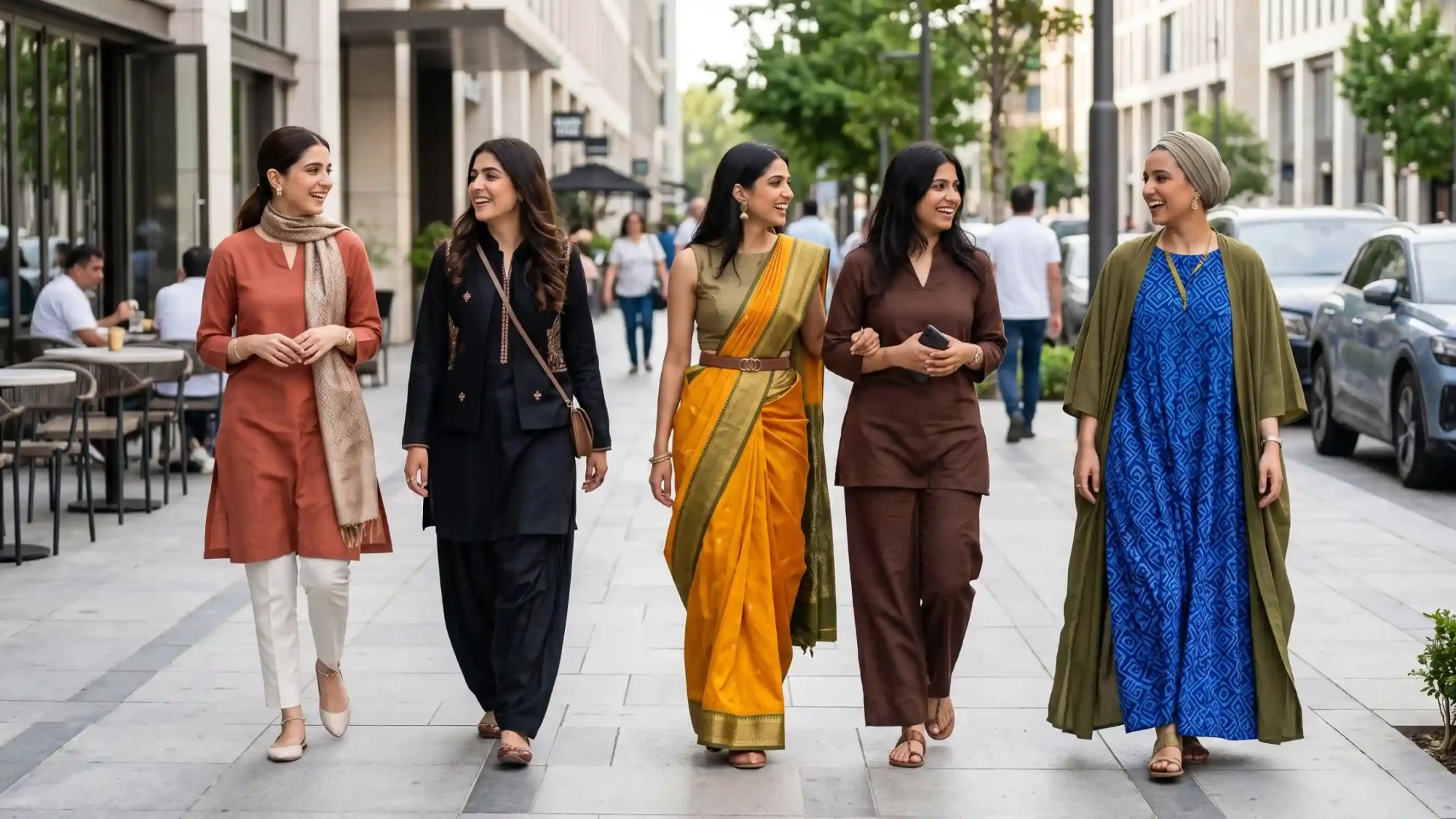
This has been the case for most of the past century, where fashion in South Asia has been viewed by the rest of the world in fashion as traditional, beautiful, and largely independent from fashion as it is experienced on an international scale. This perception is becoming quickly obsolete.
Fashion in Pakistan and India in 2026 is not only having a profound influence on the discussion of global modest fashion and fusion trends – it is dictating the dialogue. This is how.
Pakistan: The Move to Minimalist Couture
Fashions among Pakistani women in 2026 have experienced some changes that should be highlighted. Embroideries that were popular in the traditional clothing of the country have gradually been replaced by minimalist couture that emphasizes clean designs and precise tailoring, combined with delicate textiles and textures.
It should be noted that the traditions of the country still matter to women; however, they now focus on clothes that preserve the essence of Pakistani clothing styles rather than on those they wear only at their weddings. In 2026, Pakistani women want to look stylish at both a formal dinner and an informal meeting.
In casual wear, the dominant style is fusion, meaning that women combine elements of their national dress and modern trends. For example, one can observe Pakistani women who wear tailored kurtas with cigarette trousers or traditional embroidered clothes in the form of modern jackets or shalwar kameez in contemporary materials. Modern social media platforms such as Instagram and TikTok have helped spread these discussions widely.
Fusion wear becomes India’s Fashionable Statement
In 2026, the Indian fashion industry has experienced two parallel developments: becoming more sustainable, while proudly embracing fusion wear that mixes Western silhouettes with traditional Indian textiles.
The popularity of palazzo suits, crop tops worn with sarees, Banarasi lehengas matched with contemporary crop blouses and cinched waistlines, pre-styled sarees for ladies who would like the look without having to master the technique – these all point at Indian fashion making heritage stylish and accessible instead of ceremonial. As the designers’ collection research by the fashion experts from Like a Diva has confirmed, 2026’s most popular pieces represent both elaborate craftsmanship and easy-wear style.
Moreover, sustainability options have gained considerable importance too. Organic cotton, khadi, linen, and bamboo silk reign supreme among other fabrics as a result of increased eco-consciousness and interest in the heritage artisanship. Wearing an ethical and handmade kurta set from an independent Indian designer brand has turned into its own trend statement.
The Color Story in Both Countries
Warm, earthy shades like terracotta, olive, beige, pearl white, and chocolate brown are the base shades for South Asian fashion in 2026. These are enhanced by the vibrant pops of colors that South Asians have been adept at using forever: marigold yellow, pink, cobalt blue, and rich emerald green. What sets 2026 apart from previous years, however, is the deliberate use of these bright colours – as opposed to the default use seen before.
Modest Wear as Global Fashion Trend
Perhaps the most important trend in South Asian fashion in 2026, and indeed globally, is the widespread acceptance of modest wear. Prints inspired by dirac dresses worn in Somalia, South Asian embroidery, and the silhouettes of abayas popular in the Middle East all merge together to create a genuinely global modest fashion trend. Silhouettes that are loose and flowy – kaftans, baggy palazzo pants, oversized A-line maxis – are not just trending in South Asia but also finding favour among modest wearers in Europe and America.
Earth tones, matched two-pieces, and structured silhouettes make up this global modest fashion language. And the number of people wearing it? Unprecedented.
Lessons from South Asia That the West Has Learned
The Western world of fashion is gradually realizing what South Asian designers have known for centuries – that clothes may embody culture, that crafts require effort and must be paid for accordingly, and that some of the most beautiful clothes are those that are crafted the most thoughtfully.
By 2026, the way of fashioning in South Asia – heritage-oriented, craft-focused, and ever-increasingly fusion-driven – is no longer something unique to South Asia. It has become an example of the finest fashioning possible.
References: Research conducted using data from Fabricoz, Like a Diva, Kabayare Fashion, Rangreza design house, and Chic Official fashion blogs, May 2026.
Leave A Comment