
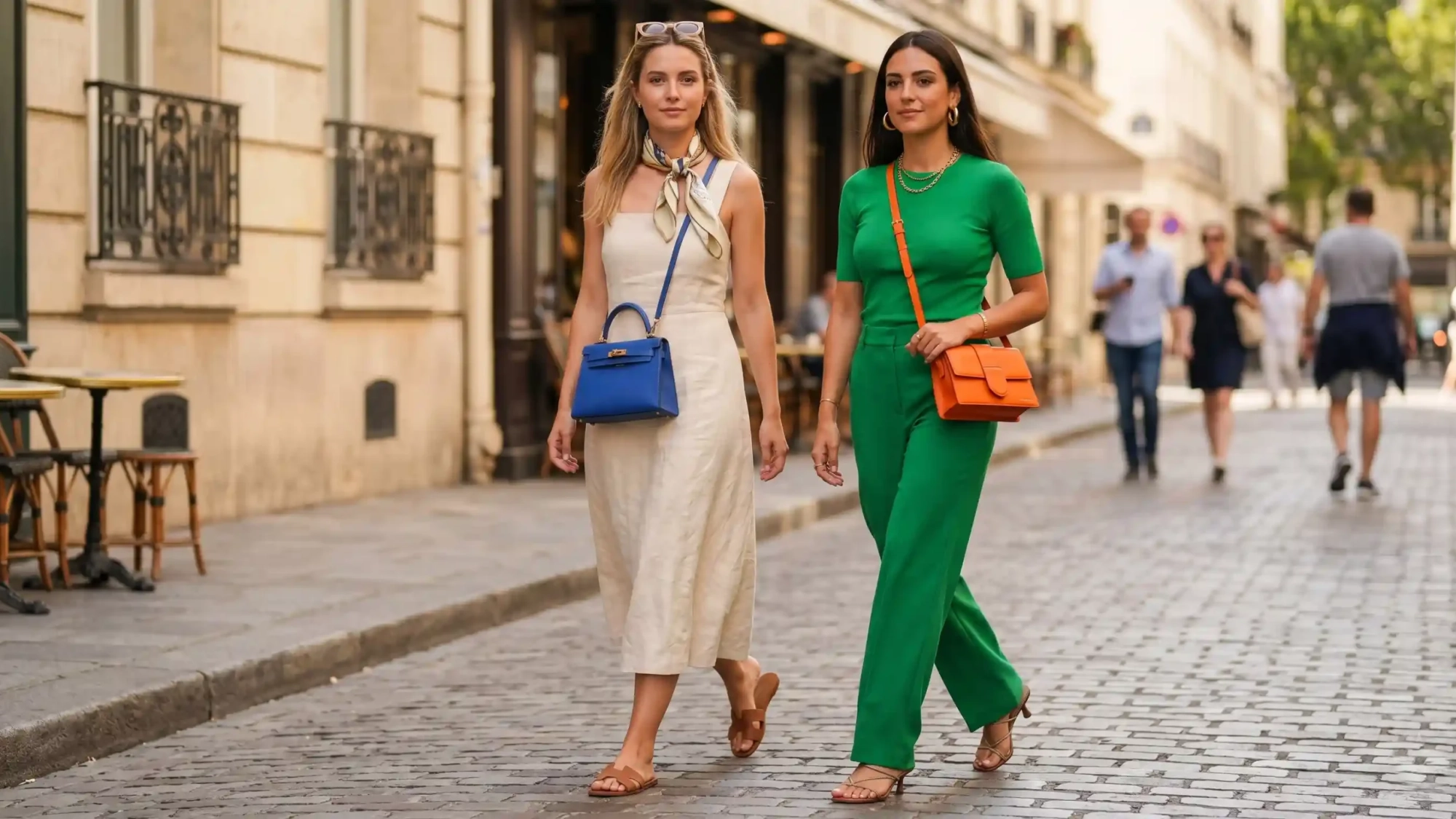
There is no mistake why the concept of “effortlessly chic” applies only to European fashion. It does not mean splurging on more stuff; rather, it means adopting a certain dress code—having less but choosing carefully and wearing them with utmost confidence.
Here’s how Summer 2026 has kept true to that idea yet made it more current than ever. And this is what’s really going on in the streets and catwalks of Europe’s two most influential fashion centers.
Paris: The Still Luxury with a Bold Touch of Color
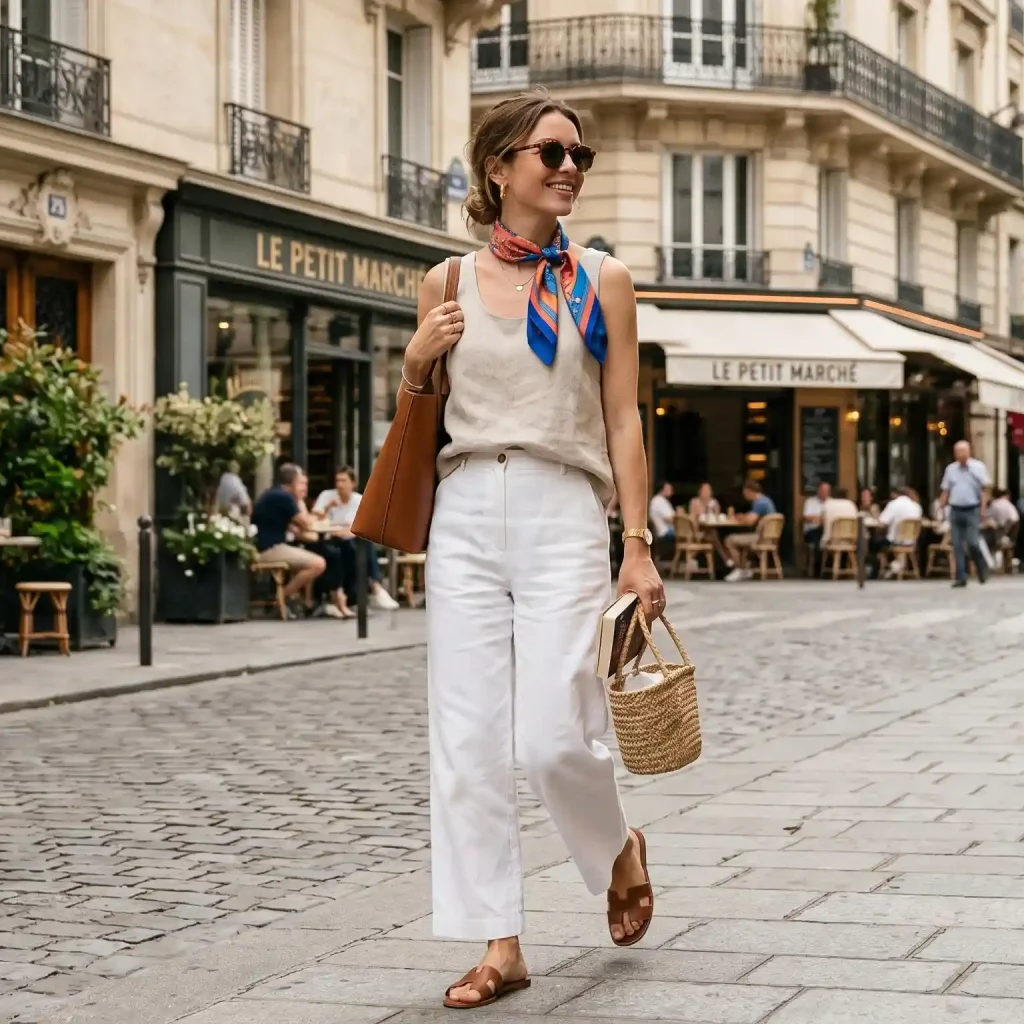
The classic Paris style remains unchanged in its fundamentals, which include sophisticated linen dresses, high-waist pants, and well-tailored shirts in gentle and neutral colors. However, the new development comes in the year 2026 when, according to Who What Wear’s editorial team, pencil-box brights become a significant element that defines Paris Fashion Week’s color trends.
These are not bright clothes for a full look. Instead, they involve having one cobalt-colored scarf tied around the neck with a cream linen dress. One red leather bag that contrasts with beige clothing items, and Yves Klein blue shoes with soft grey trousers. At Akris, Alaïa, and Lanvin, monochromatic clothing in vivid hues has been suggested, where a person wears only one color from top to bottom, accentuated with black leather accessories.
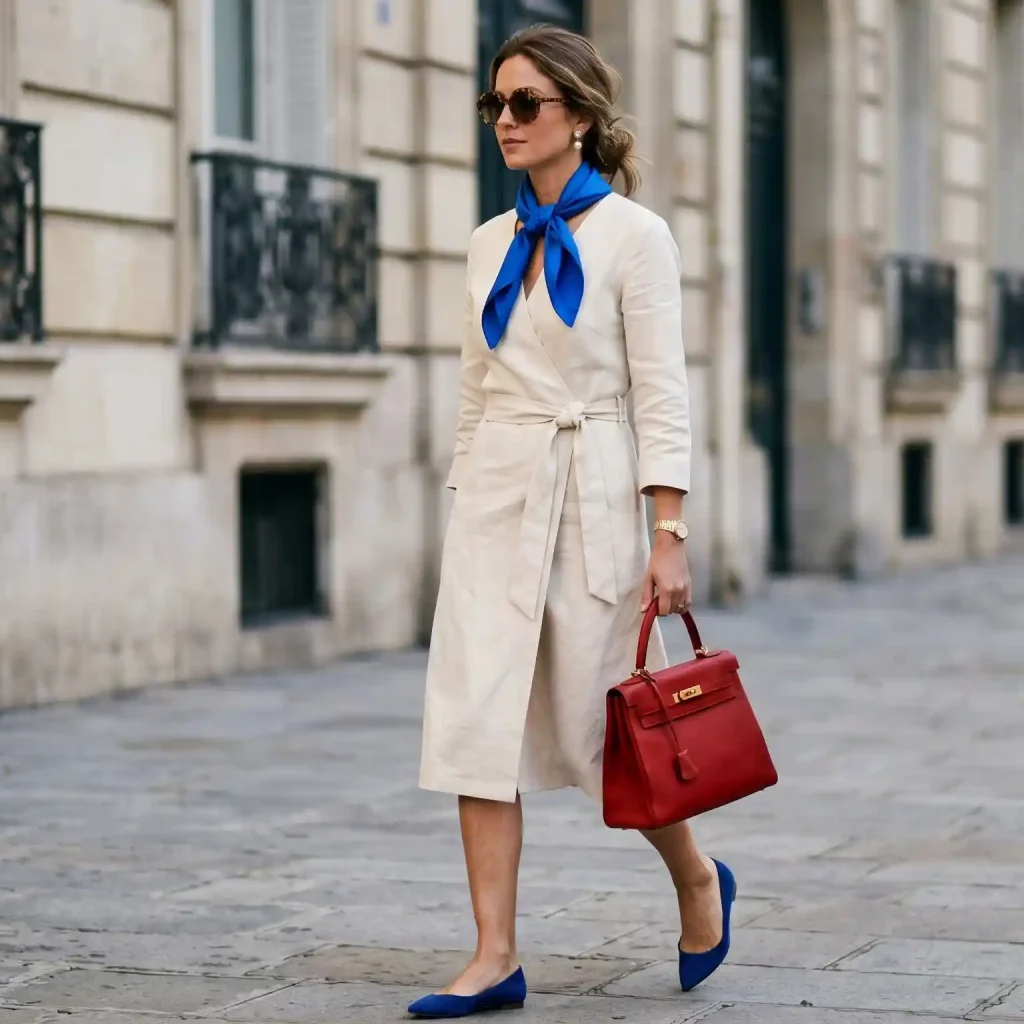
Paris has learned that luxury becomes even more luxurious when it is accented with one bold color note.
Parisian Accessories Formula
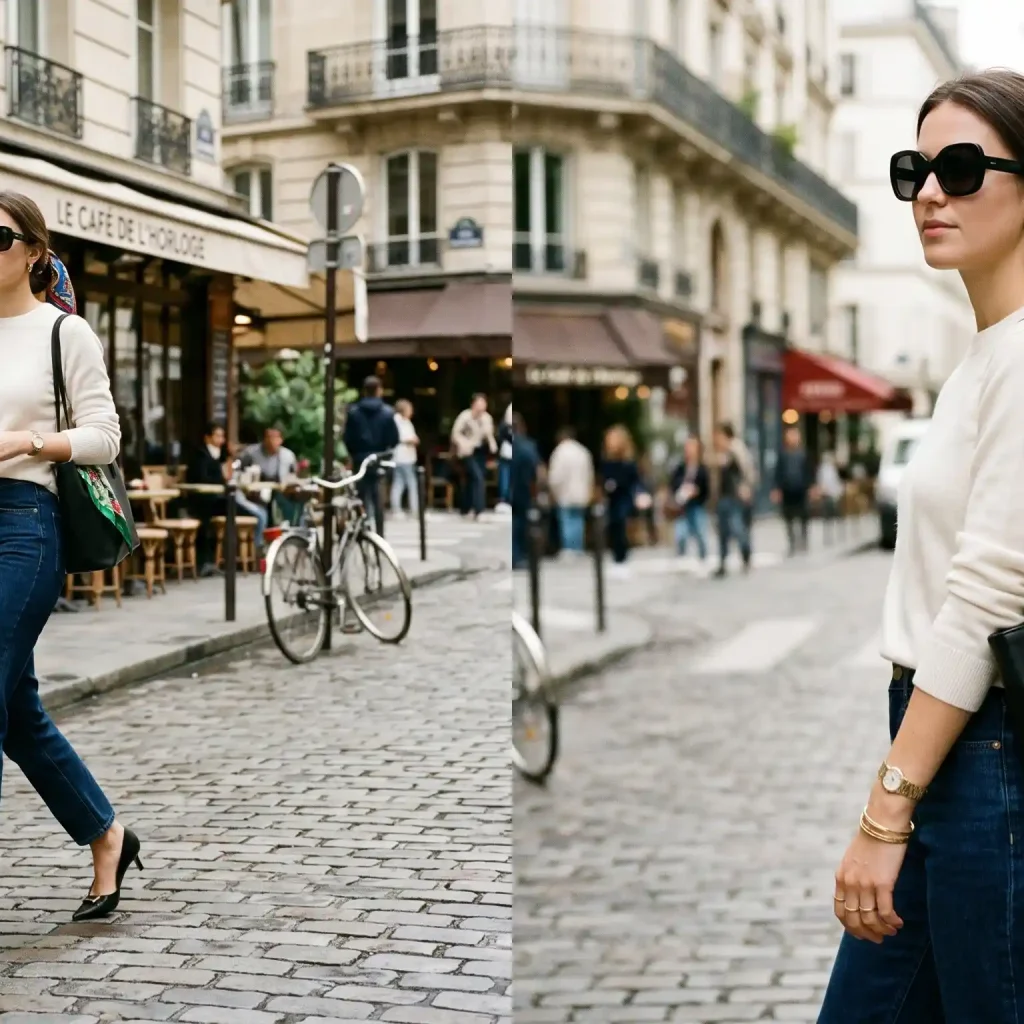
Silk scarves are non-negotiable: they can be tied in the hair, wrapped around the handle of your handbag, or left hanging loosely around your neck. Oversized-framed minimalist sunglasses are the preferred choice when it comes to eyewear. Simple flats or kitten-heeled leather shoes round off the look. The idea is that accessories need to enhance the most basic of ensembles, rather than detract from it.
Milan: Dramatic, Colourful, and Totally Fearless
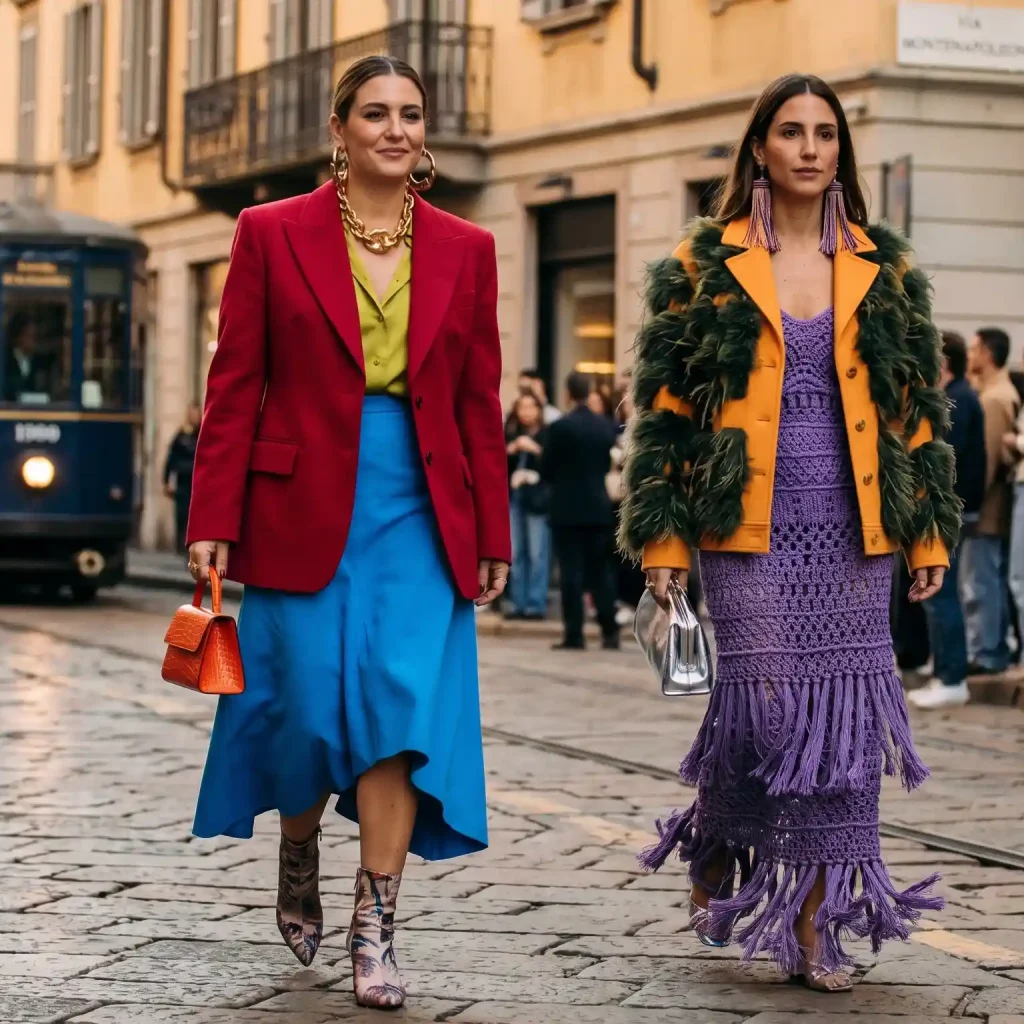
Whereas Paris takes one daring detail, Milan runs with it. The SS26 runway collections by Prada, Versace, and Fendi in Milan, according to Who What Wear, featured “colour, colour, and even more colour,” with striking combinations that would not have been conceivable in the quiet early 2020s. Orange with pink. Red with blue. Green with purple. The stranger the combination, the better.
Frills and texture also feature prominently on Milan’s summer 2026 runway. At Ferragamo, for instance, 1920s-inspired fringe adorned their satin scarves and structured jackets. At Alberta Ferretti, crochet is given a lightweight feel. At Bottega Veneta, it is used to create textures that approach the sculptural. In a nutshell, if Paris wears emotion, then Milan wears theatrics.
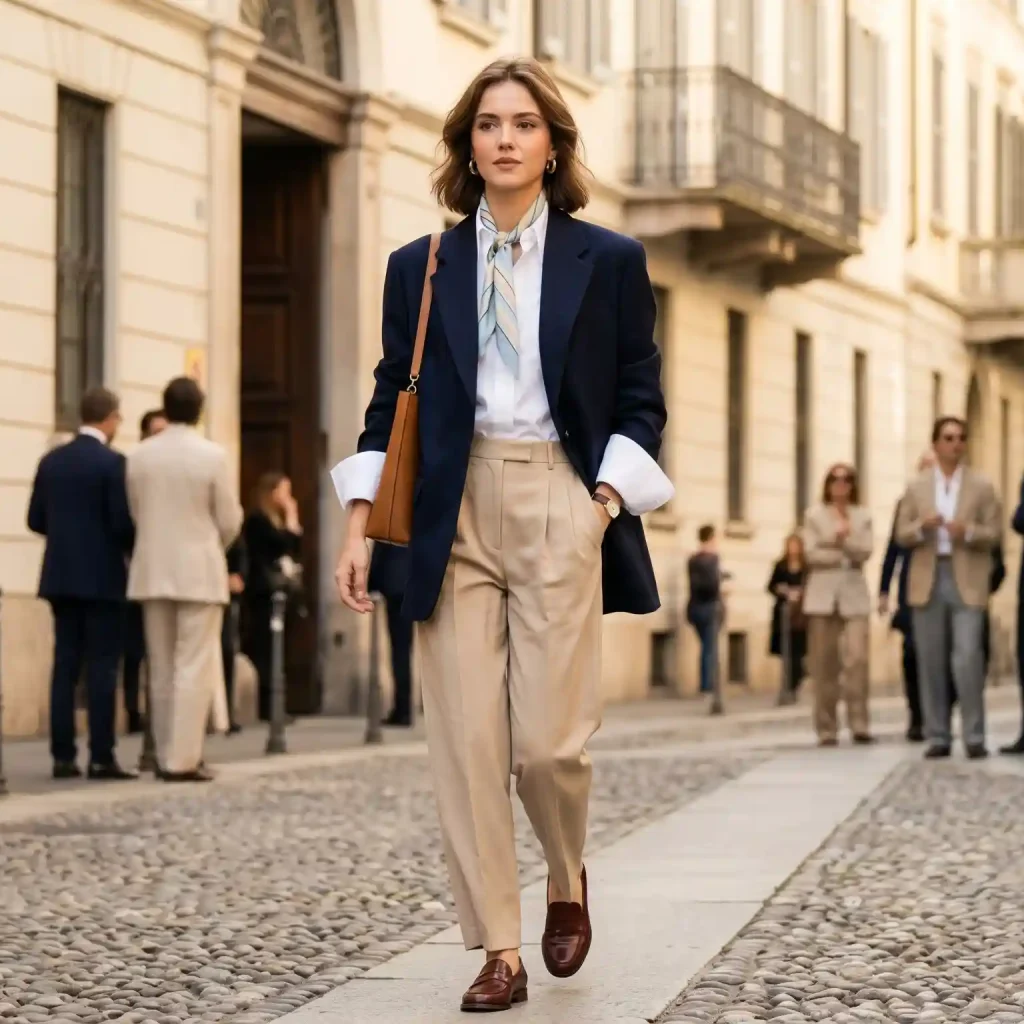
Preppy Goes European
Among some of the surprising SS26 trends in Milan is a European interpretation of preppy style. While brands from the US such as Ralph Lauren and Tommy Hilfiger have long defined preppy fashion, this year’s collections from brands such as BOSS and Missoni present preppiness in a European way, which is more architectural and clean and less about logos.
Italian Riviera Style
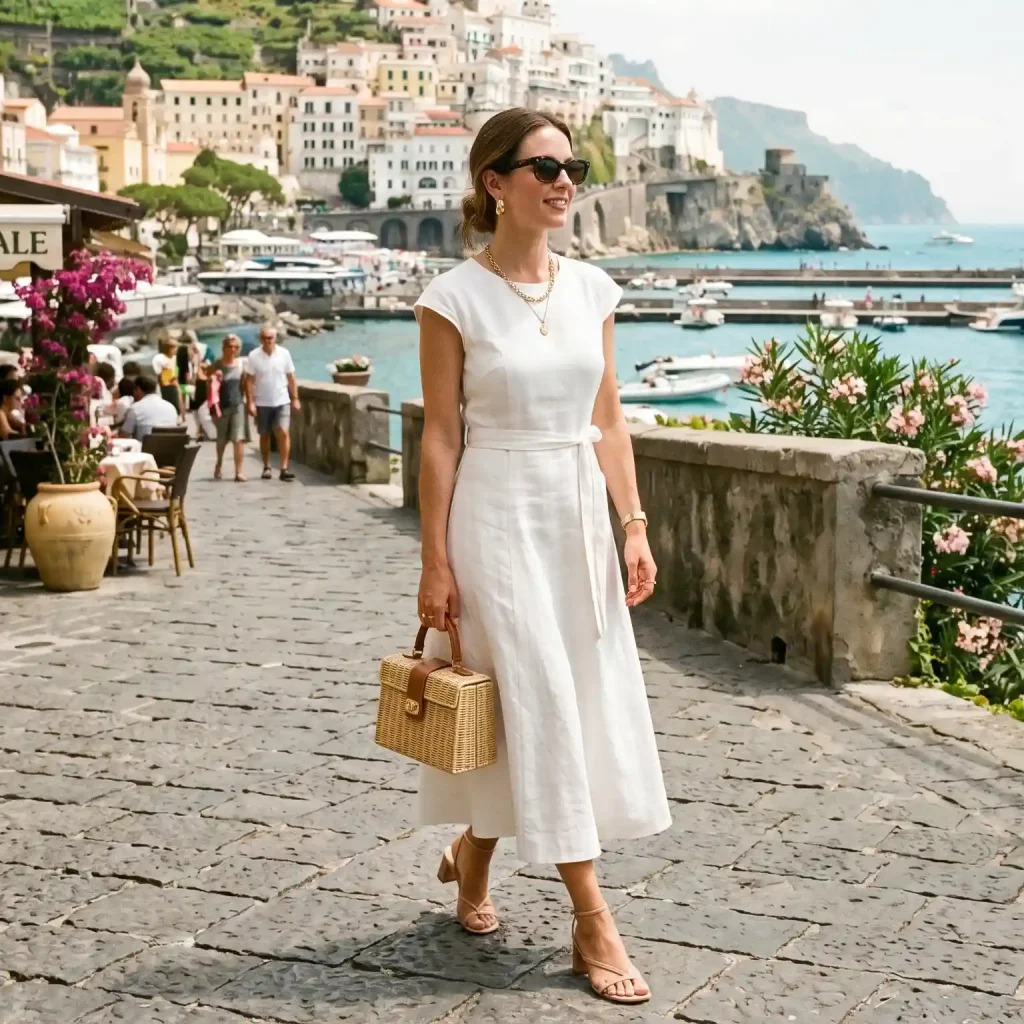
Away from the runway, one of the most influential style sources in the world is found in the streets of Italian coastal towns. For summer 2026, Italian Riviera style means a tailored linen dress that is either white or navy, gold jewelry including chain necklaces and hoop earrings, nude leather sandals with a slight heel, and a boxy straw or leather purse.
What Every Summer European Wardrobe Tells You
A European summer wardrobe for 2026 in Paris and Milan follows the same logic – comfortable materials, a combination that will carry through all day without a need for changing, accessories that accentuate without creating fuss, and colors used wisely.
Your wardrobe recipe for success – elegant basics, one item to stand out plus some accessories. Pick linens and soft cottons. Choose one color moment – a scarf, a purse or a statement pair of shoes. Keep everything else minimalistic.
The EU Regulatory Perspective (Yes, Even Fashion Has One)
The more profound cultural significance of fashion in Europe does not stop there; the recent introduction by the EU of the Digital Markets Act, which is changing the rules around platform data management, is similarly pressuring fast fashion brands around their digital advertising techniques. It goes without saying that the Europeans are some of the world’s most vocal opponents of fast fashion, especially the French and German ones.

Reference: Based on Paris Fashion Week SS26 and Milan Fashion Week SS26
Leave A Comment